Prairie Dogs
If the bison are Theodore Roosevelt National Park's iconic centerpiece, the black-tailed prairie dog (Cynomys ludovicianus) is its most underestimated resident. They're everywhere. Abundant in a way that takes a moment to register, their towns spreading across the grasslands in all directions. And despite being small animals that spend a good portion of their lives underground, they are completely impossible to miss.
There are five species of prairie dogs in North America, but the black-tailed is the only one found in the park. Named for their bark-like calls and the dark tips of their tails, they're large rodents built for a life of constant vigilance. They live in colonies called "towns," organized into tight family units known as coteries, each defending its own territory. Members of a coterie recognize each other by touch, and their daily lives revolve around the shared work of raising young, building burrows, and keeping watch.
I wasn't prepared for the sheer number of them. Standing at the edge of a town, it was genuinely hard to know where to point the camera. Focus on one animal doing something interesting, and you could guarantee that three others were doing something more interesting just out of frame. That distraction, combined with the fact that they're considerably smaller than bison, made them a more humbling subject than I anticipated. I was less successful here than I'd hoped. It was fun nonetheless.
Portraits
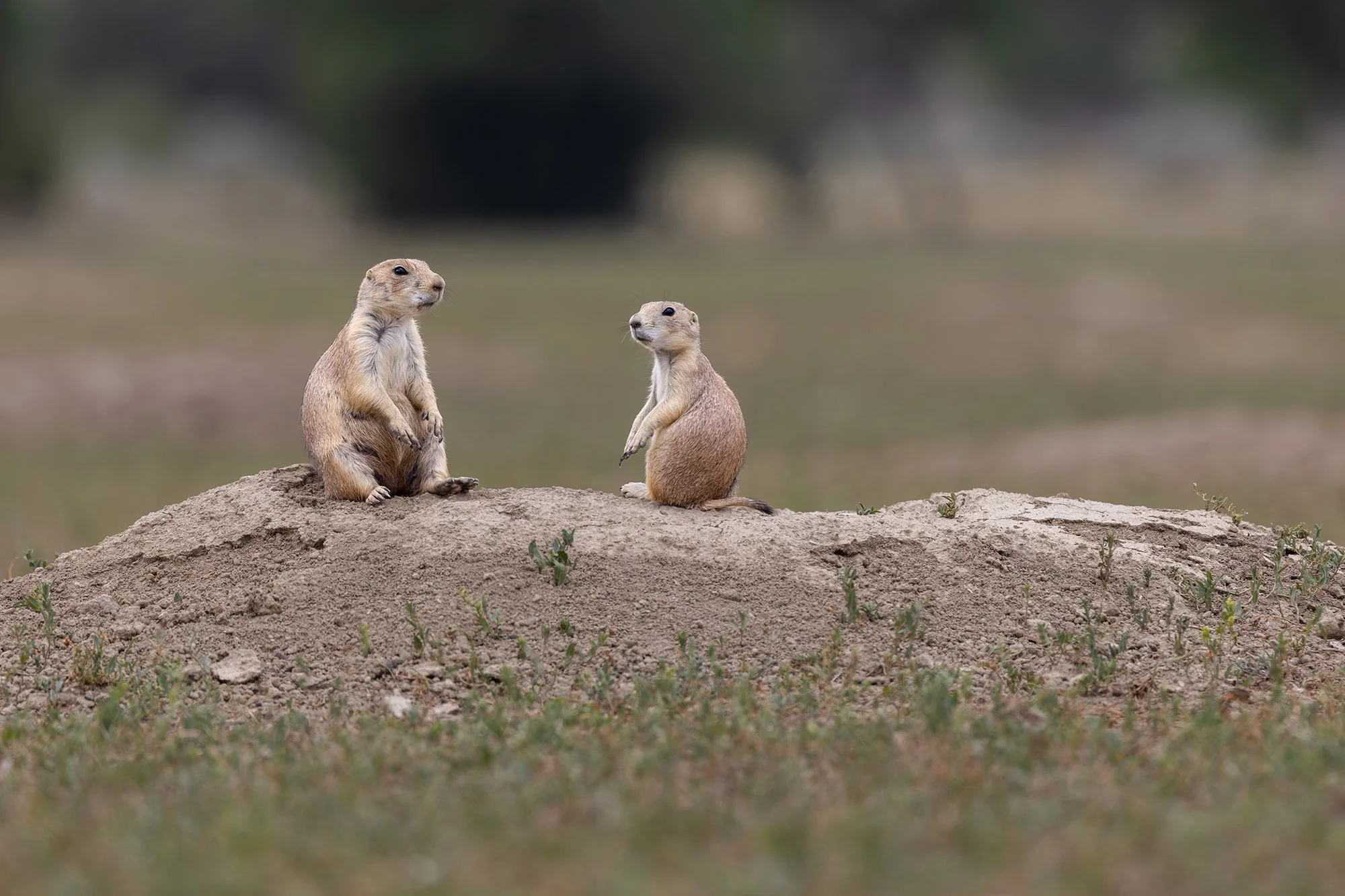
Portraits were the most approachable of the four categories. My preference is always to photograph wildlife at eye level, and with prairie dogs, that means getting low. Other than the minor irritation of lying on dry, prickly grass, this wasn't difficult. Stay flat, use a long lens, find an animal perched on a burrow or casually eating nearby. Locking focus on the eye with a shallow depth of field was straightforward by prairie dog standards, which is to say: less chaotic than everything else.
Environmental
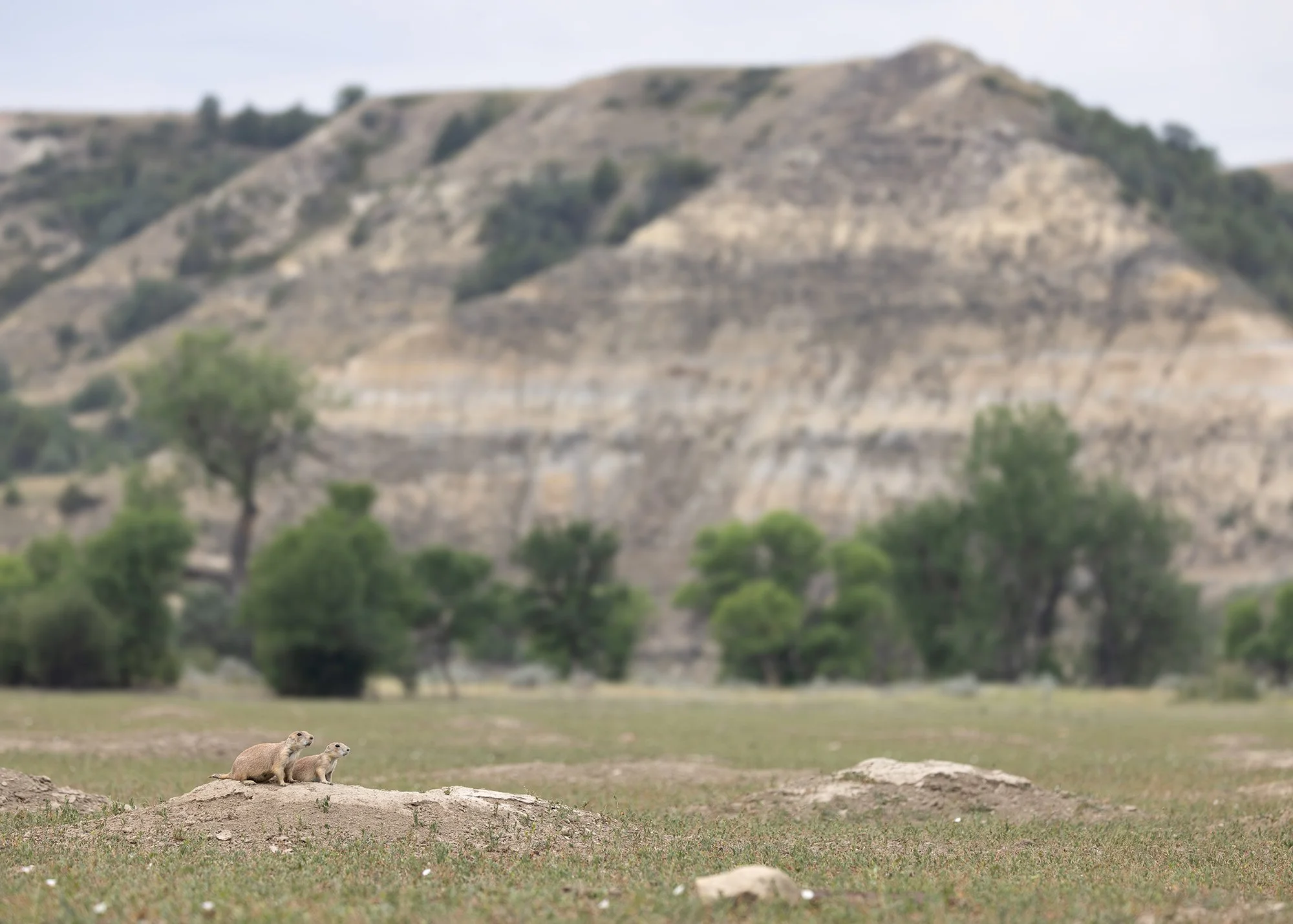
Environmental shots were equally manageable, though they required a deliberate change of instinct. When you have a 500mm lens trained on an animal this endearing, it's easy to stay zoomed in indefinitely. Pulling back to place them within the vast badlands landscape required a conscious effort, but the results justified it. A small, alert figure against the scale of the park's terrain says something different, and truer, about what these animals actually are.
Details
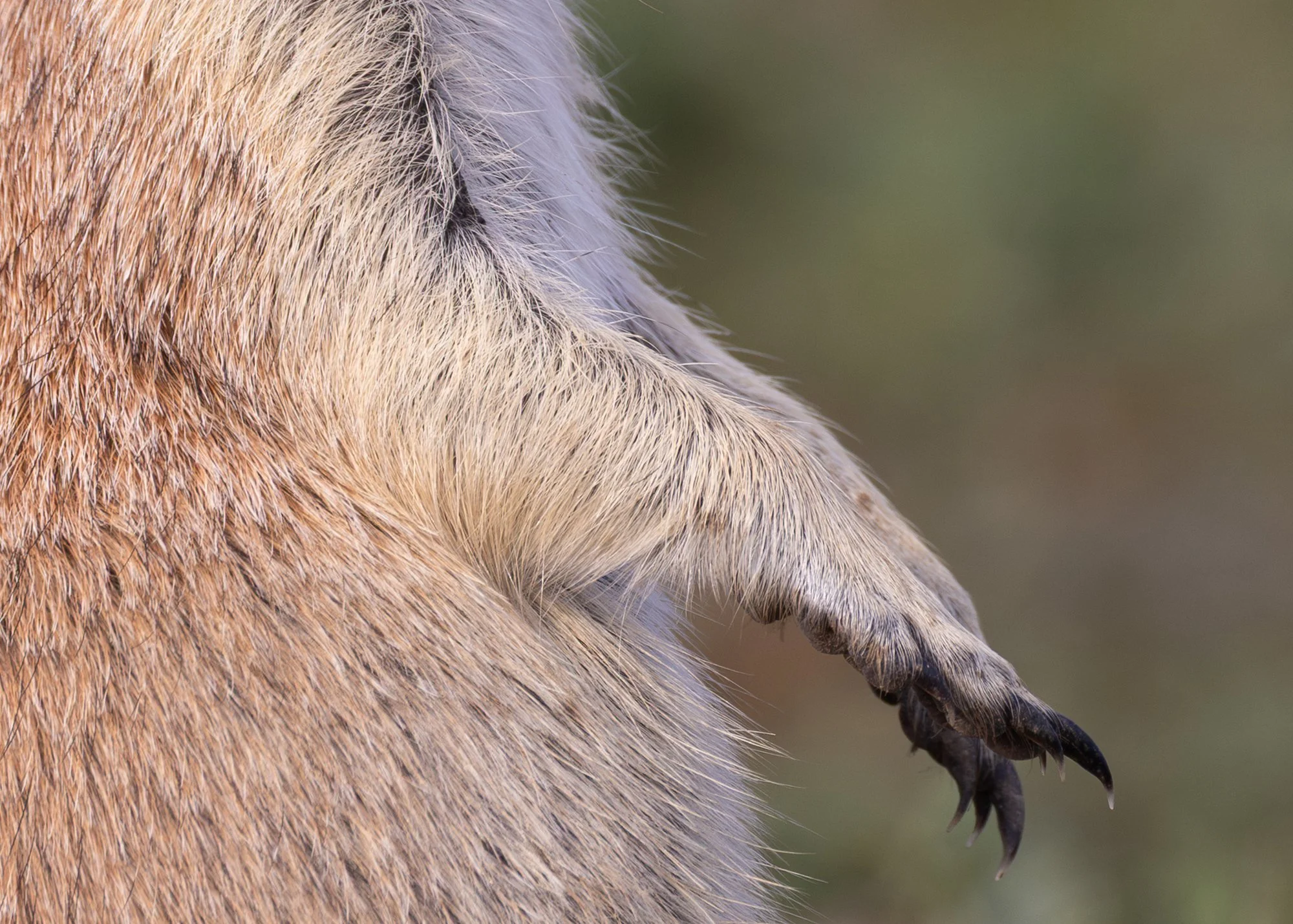
Detail shots were where things got harder. The prairie dogs in the park are well accustomed to visitors, but that tolerance has its limits, and a long lens can only compensate so far. I was drawn to their long, curved nails, well suited to a life of serious excavation, but I'll be honest: the images I came away with owed more to tight cropping in post than to any great execution in the field. Something to work on.
Behavior
Behavior was the most challenging category, partly for a reason I couldn't do anything about. A significant part of a prairie dog's life happens underground, in those elaborate tunnel systems, and I had no access to any of it. When they were above ground and moving, they were fast and unpredictable in the way that small, nervous animals tend to be.
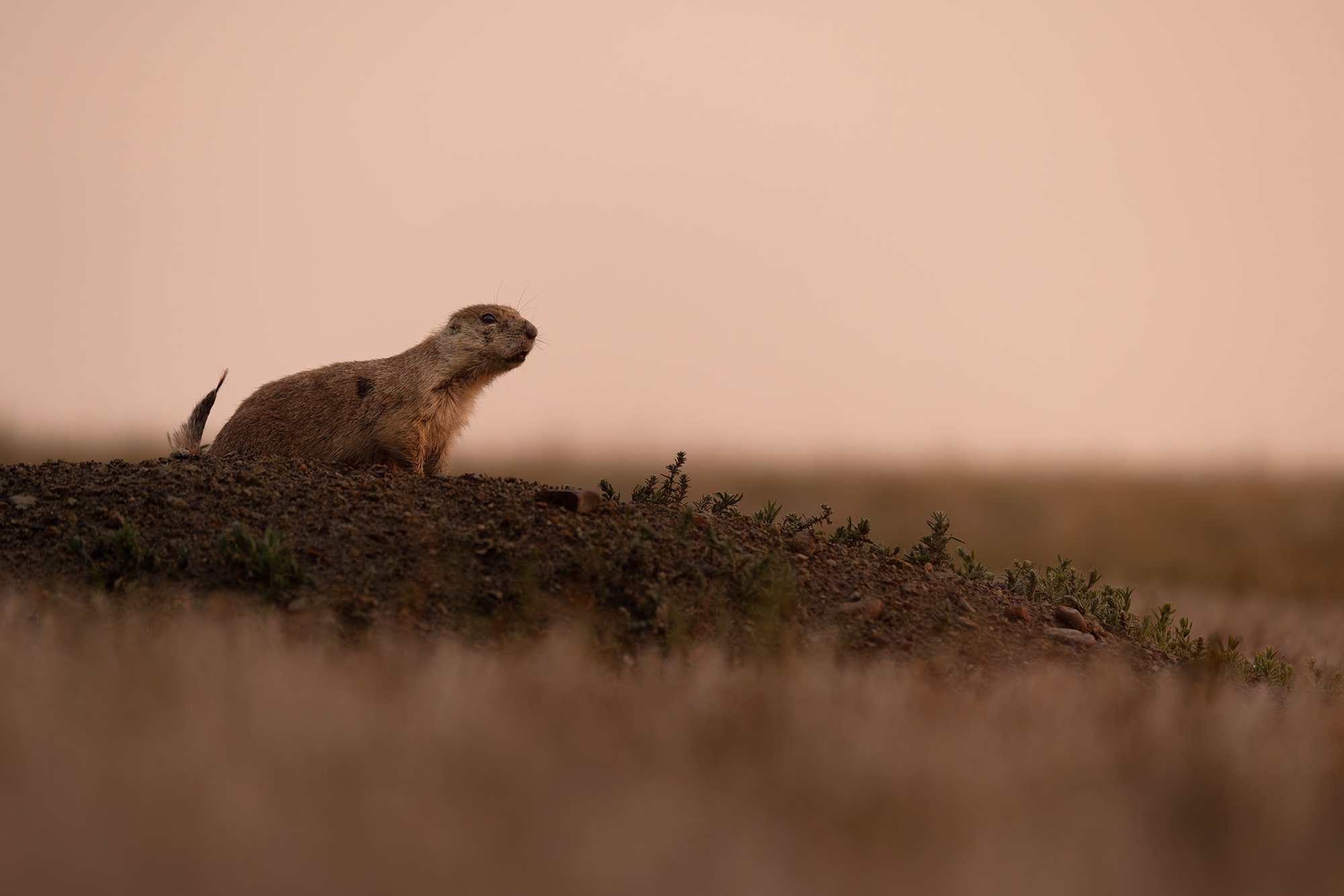
The one behavior I did capture was a prairie dog vocalizing at sunset, which felt like an appropriate note to end on, because their communication system turns out to be one of the more remarkable things about them. What sounds like a simple alarm call is, on closer inspection, something far more sophisticated. Research suggests that prairie dog vocalizations function almost like descriptive language, encoding specific information about approaching threats: the type of predator, its size, its speed, even details like the color of a human's shirt. The calls aren't just signals; they appear to carry something closer to description.
None of that complexity is obvious in my photograph. The vocalizing animal at sunset reads, at first glance, as a small creature making noise. But knowing what might actually be encoded in that call makes the image mean something different to me, which is perhaps the best argument for learning about what you're photographing before you point the camera at it.