Seeing horses living wild was, to reach for the obvious word, wild. It's hard to explain exactly why it hits so differently, but there's something that shifts when you encounter an animal you've only ever seen domesticated, tamed, and fenced in, suddenly existing entirely on its own terms. They feel more vital. More complete, somehow. A little dangerous, and incredibly beautiful. I was enamored from the first sighting.
It's worth pausing on the word "wild," though, because it's slightly complicated. The only truly wild horse remaining today is Przewalski's horse, native to the steppes of Central Asia and found in Mongolia. The horses of Theodore Roosevelt National Park are something different: feral. Descended from domesticated animals, they're horses that escaped or were left behind during the open-range ranching era and have lived free ever since. As I mentioned in my previous post, the park recognized them as part of its historical landscape in 1970 and has managed a herd of between 70 and 110 animals ever since. The distinction between wild and feral is a technical one, and standing on a hillside watching them move across the grasslands, it felt largely beside the point.
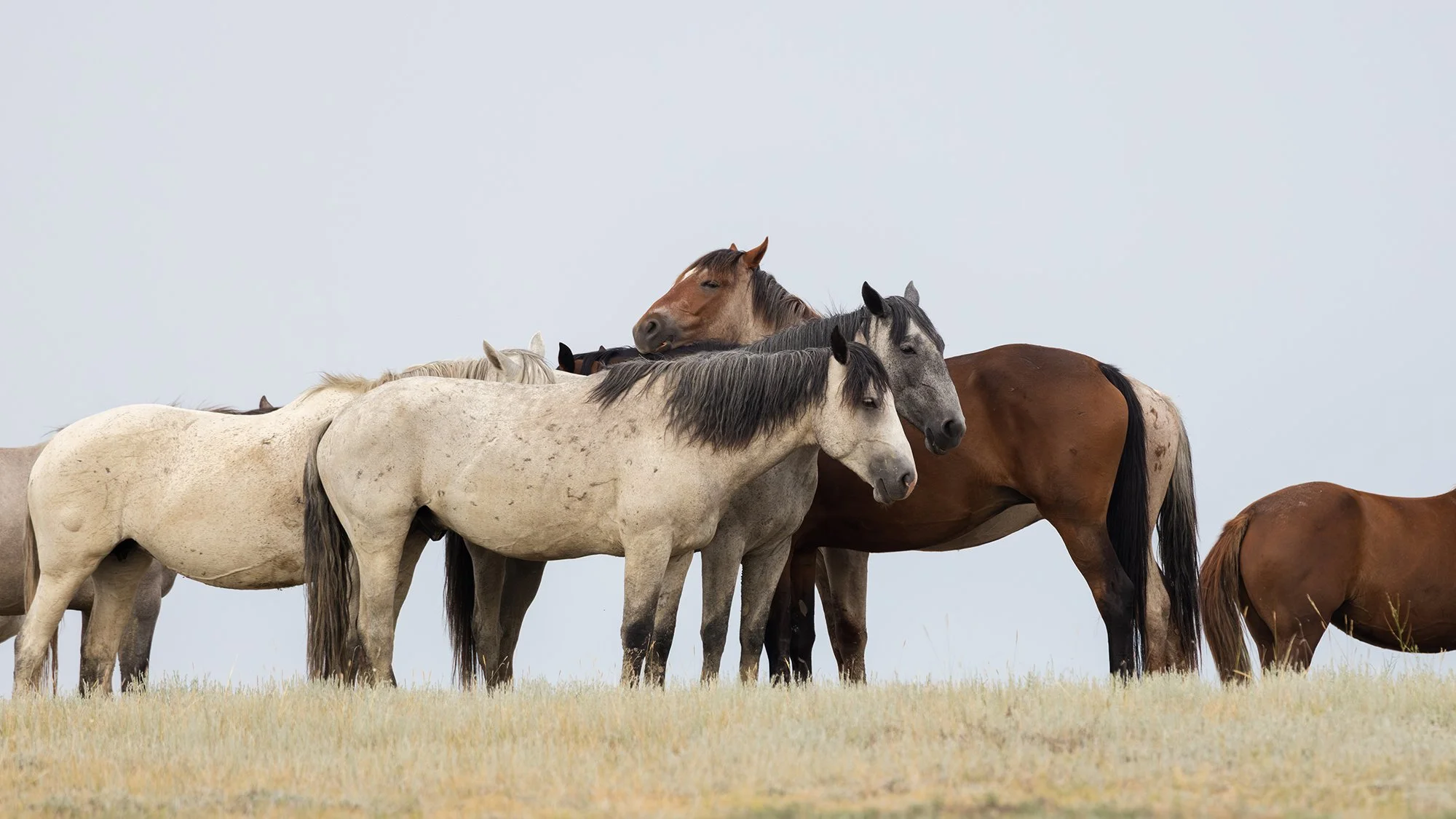
We first spotted a group standing on the prairie above the road. A loose gathering, some of them close enough to be touching, others fanned out at the edges, keeping watch in different directions. There was an ease to the way they held themselves together. A quiet bond that was immediately apparent, even from a distance.
It was a great opportunity to photograph them, though getting the shots I wanted proved more layered than I expected.
Portrait
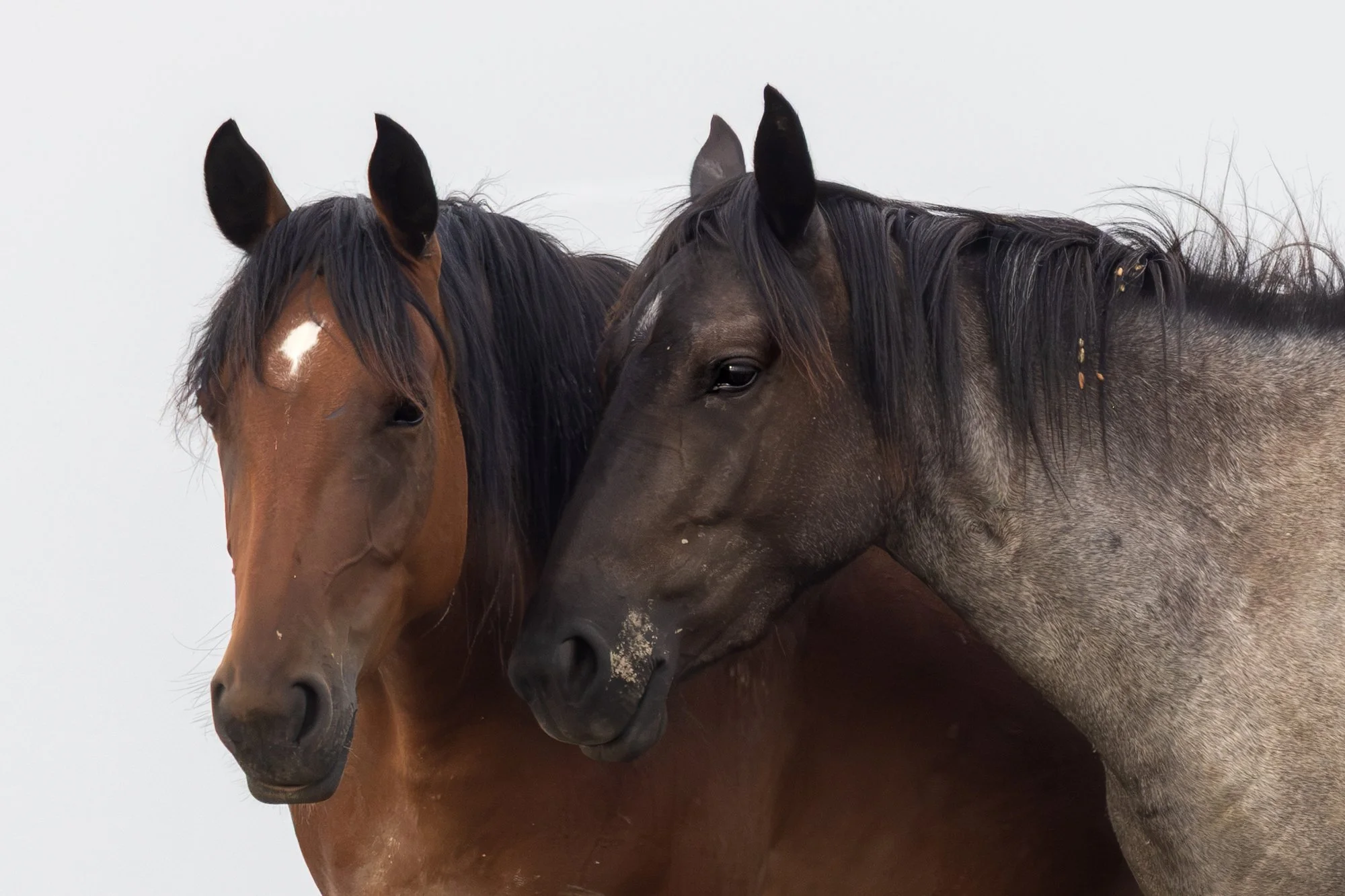
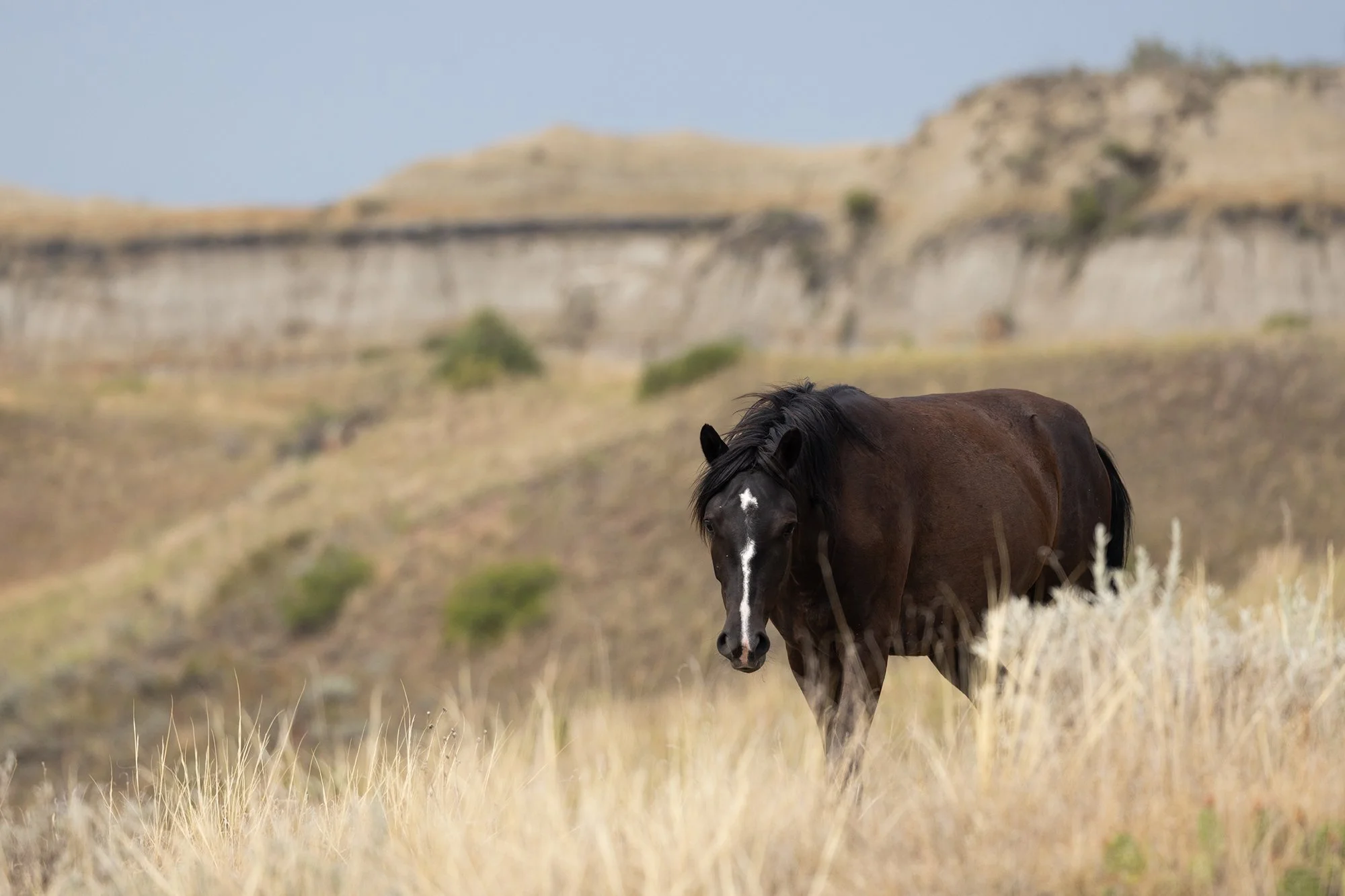
Portrait shots were achievable but not simple. Isolating a single horse in the frame sounds straightforward until you're trying to do it within a loose, shifting herd. There always seemed to be a tail, a haunch, or a stray ear encroaching from the edge of the frame. The other challenge was familiar from the bison: heads down, grazing. I spent a while waiting for raised heads and direct eye contact before I realized that a horse mid-graze, absorbed entirely in its own existence, was probably the more honest portrait anyway.
Behavior
I didn't witness any clashes or dramatic displays. What I saw instead was quieter and, in retrospect, equally interesting. The horses spent a great deal of time standing close together, sometimes with one resting its head on the back or withers of another. I looked into this afterward and learned that it's a well-documented form of social bonding. Horses that stand this way are typically what researchers call preferred associates, close companions within the herd whose relationships can persist for years. Resting a head on another horse's back is a particularly intimate gesture, one that signals a high degree of trust. A horse won't make itself even slightly vulnerable that way unless it feels genuinely safe.
There was practical logic woven through it too. Standing in close proximity, oriented in slightly different directions, the horses were quietly sharing the work of staying alert, covering more angles of the landscape between them. And heads positioned near tails meant each horse could use its own to swat flies from the other's face. The whole scene looked like rest. It was also, I came to understand, an entire social system quietly operating in plain sight.
When I noticed one horse resting its head on the back of another, I knew I'd found the behavior worth sharing.
Detail
Detail shots were the hardest category here. The horses had beautiful coats, manes, and tails, but they didn't crowd against cars the way bison sometimes did during a jam, which meant working at a respectful distance and leaning heavily on tight cropping in post. The results were closer to suggestive than definitive. Another item on the growing list of things to do better next time.
Environmental
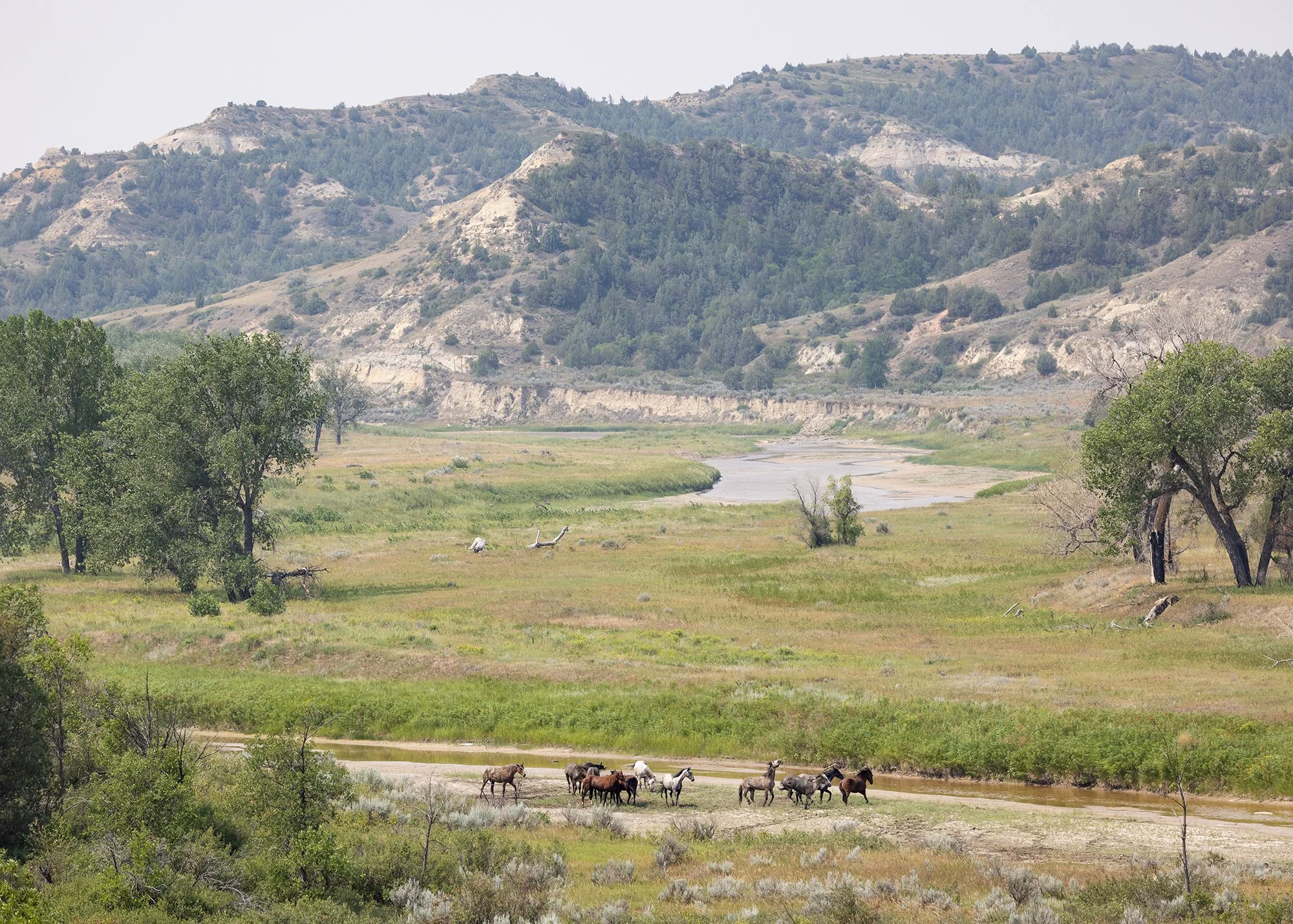
The best environmental shot came at the very end of the trip. The same herd I'd first spotted on day one was now far below us, small figures on a dry-ish riverbed, rolling in the dust in the heat of the afternoon, well away from roads and visitors. They had no idea we were watching. It was one of those moments that photography can record but can't quite replicate: the feeling of looking in on a world that doesn't need you in it at all.