When I’m out in the field photographing wildlife, things move fast. I’m constantly juggling a long list of considerations, often all at once: what’s happening right now, what’s likely to happen next, where the light is coming from, how I can best compose the scene, whether my camera settings are dialed in, and whether there’s a particular behavior I should be ready for. Even when I think I’ve managed those considerations well, there’s still a lot of hoping for the best.
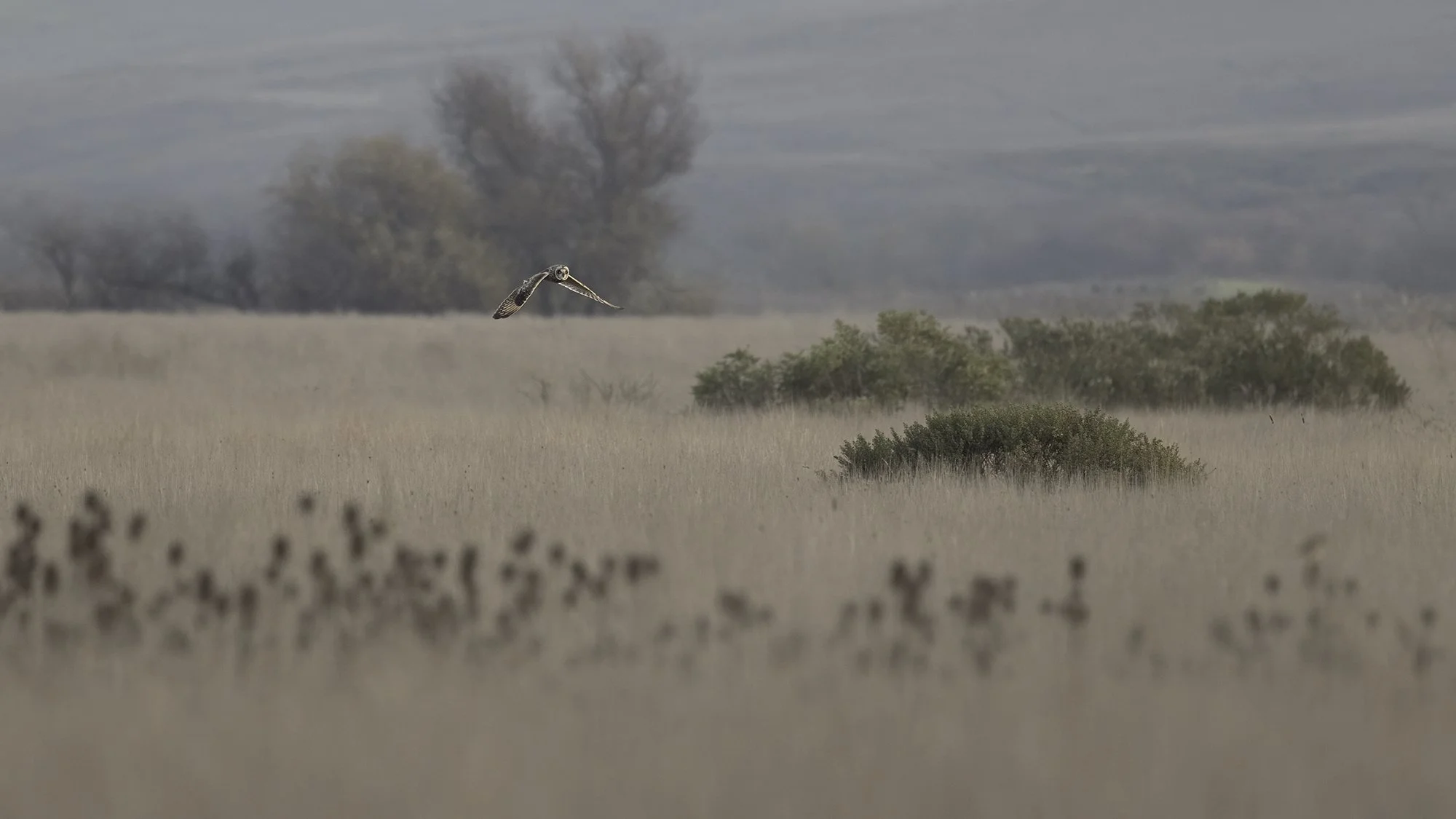
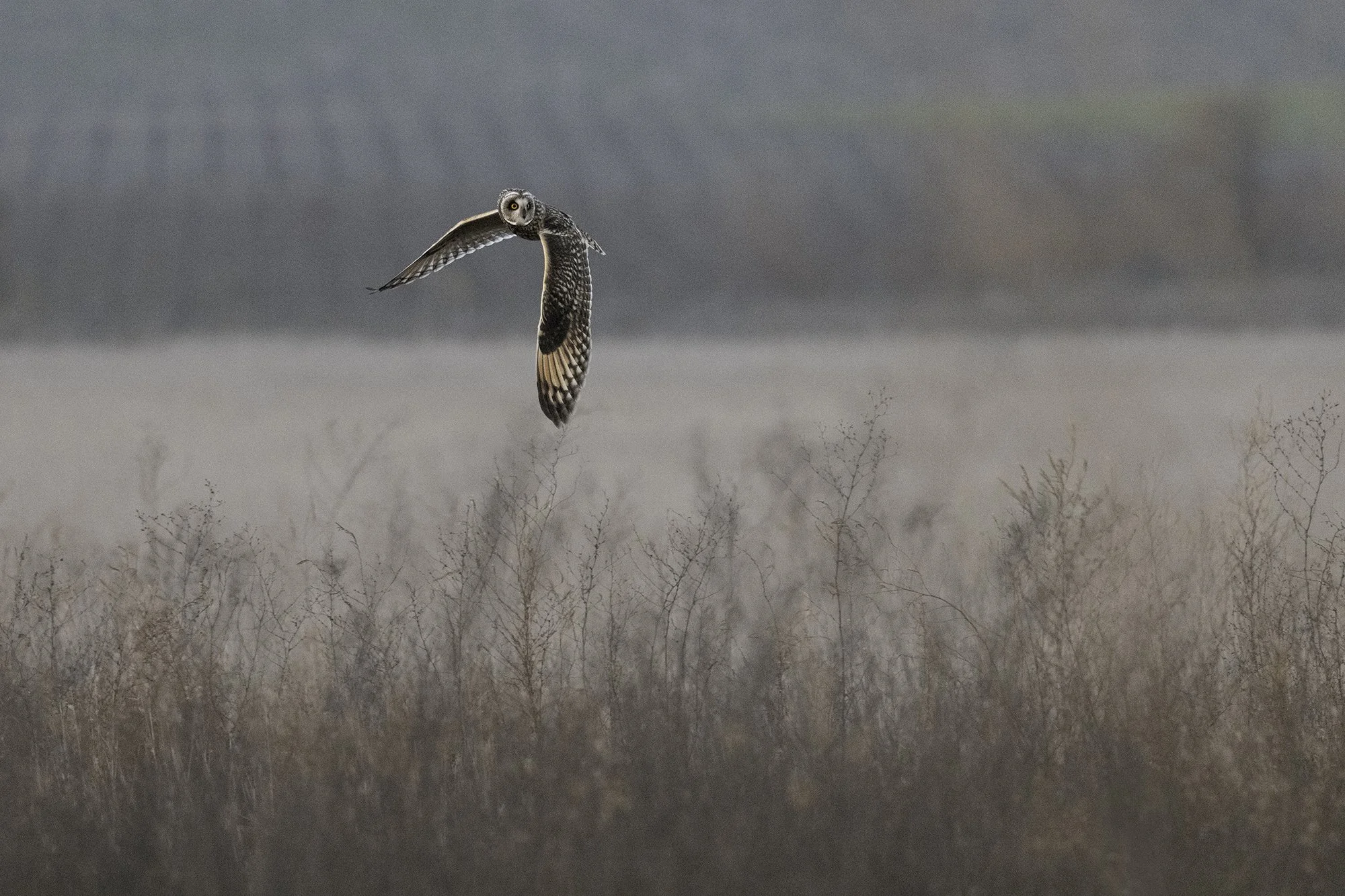
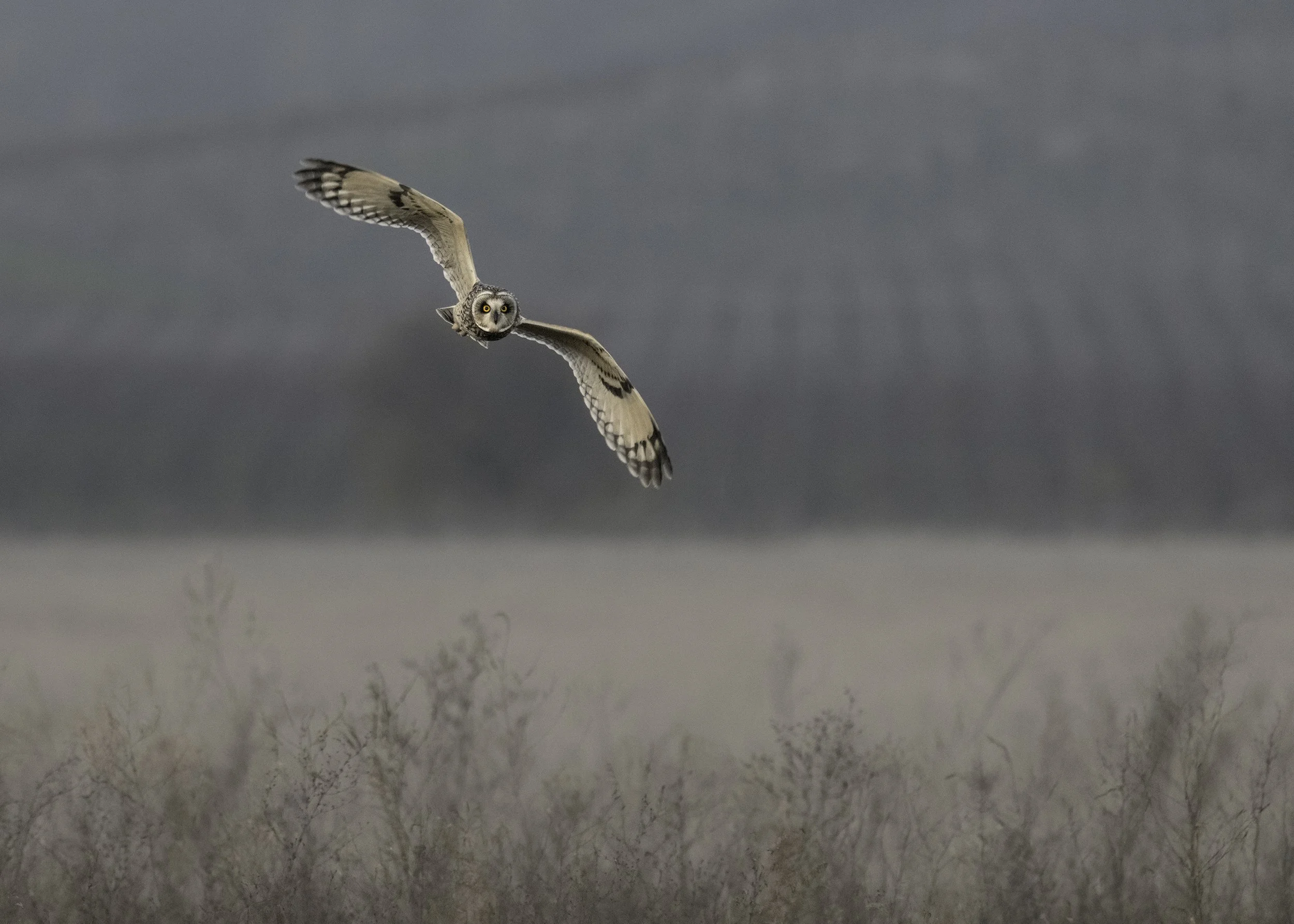
Wildlife photography doesn’t allow for frequent pauses. I can’t stop every few seconds to review images on the back of the camera, re-evaluate my approach, and pixel-peep my results. At most, I’ll get a quick glance to confirm exposure or check that I’m roughly on target. Usually, I have a general sense of whether I’m getting something usable, but I truly never know how successful a shoot has been until much later. A recent afternoon photographing short-eared owls (Asio flammeus) at Tolay Regional Park was a perfect example.
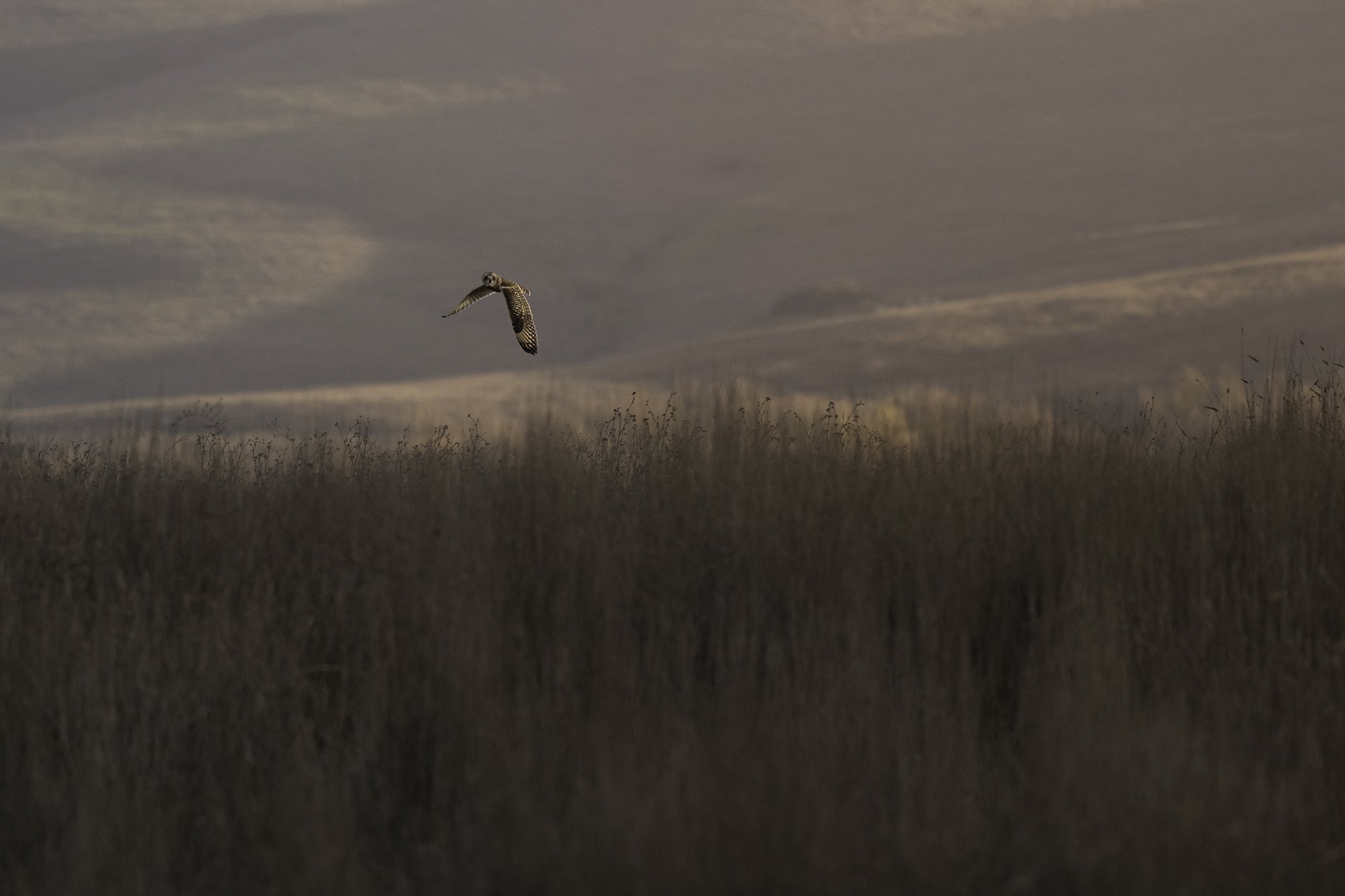
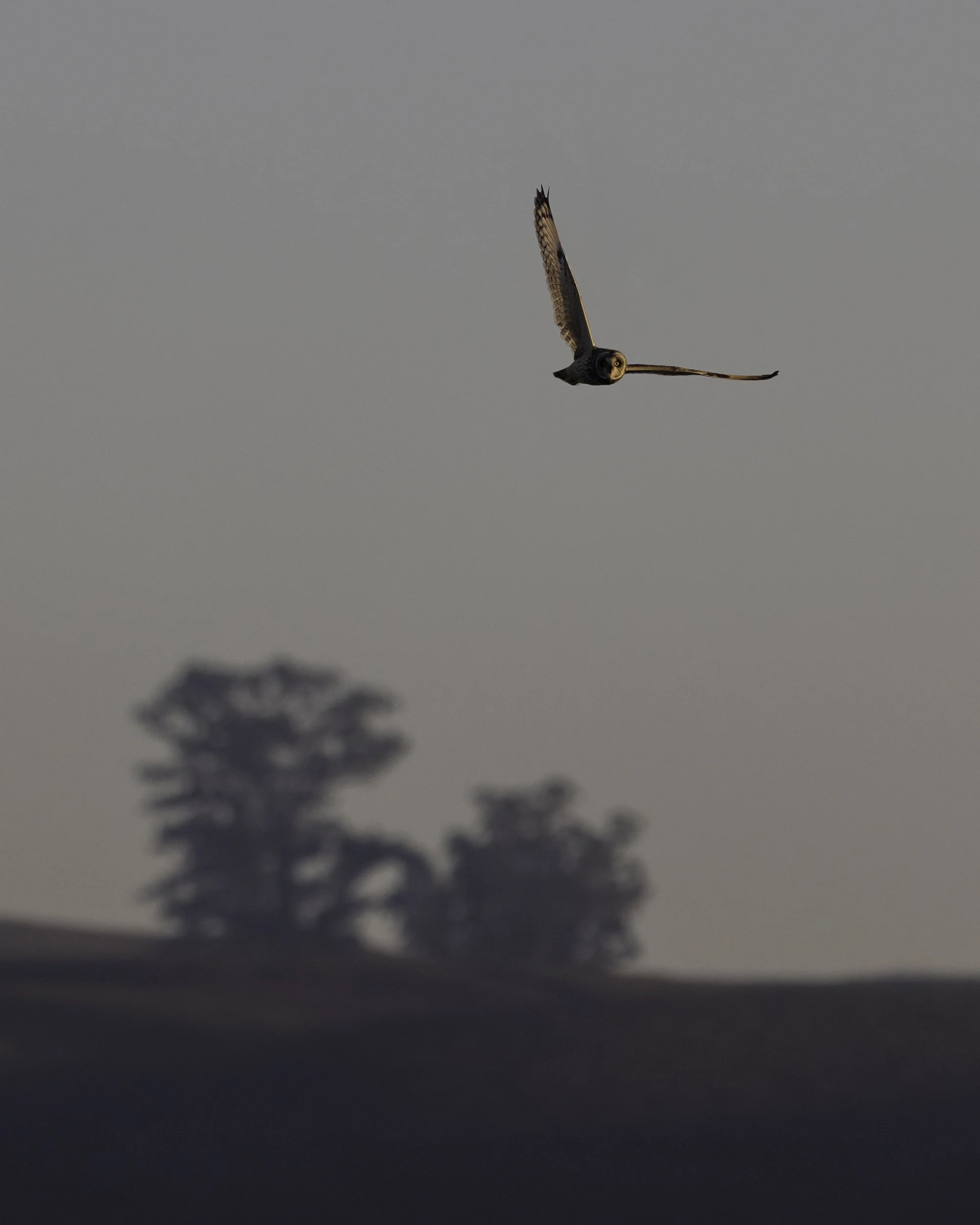
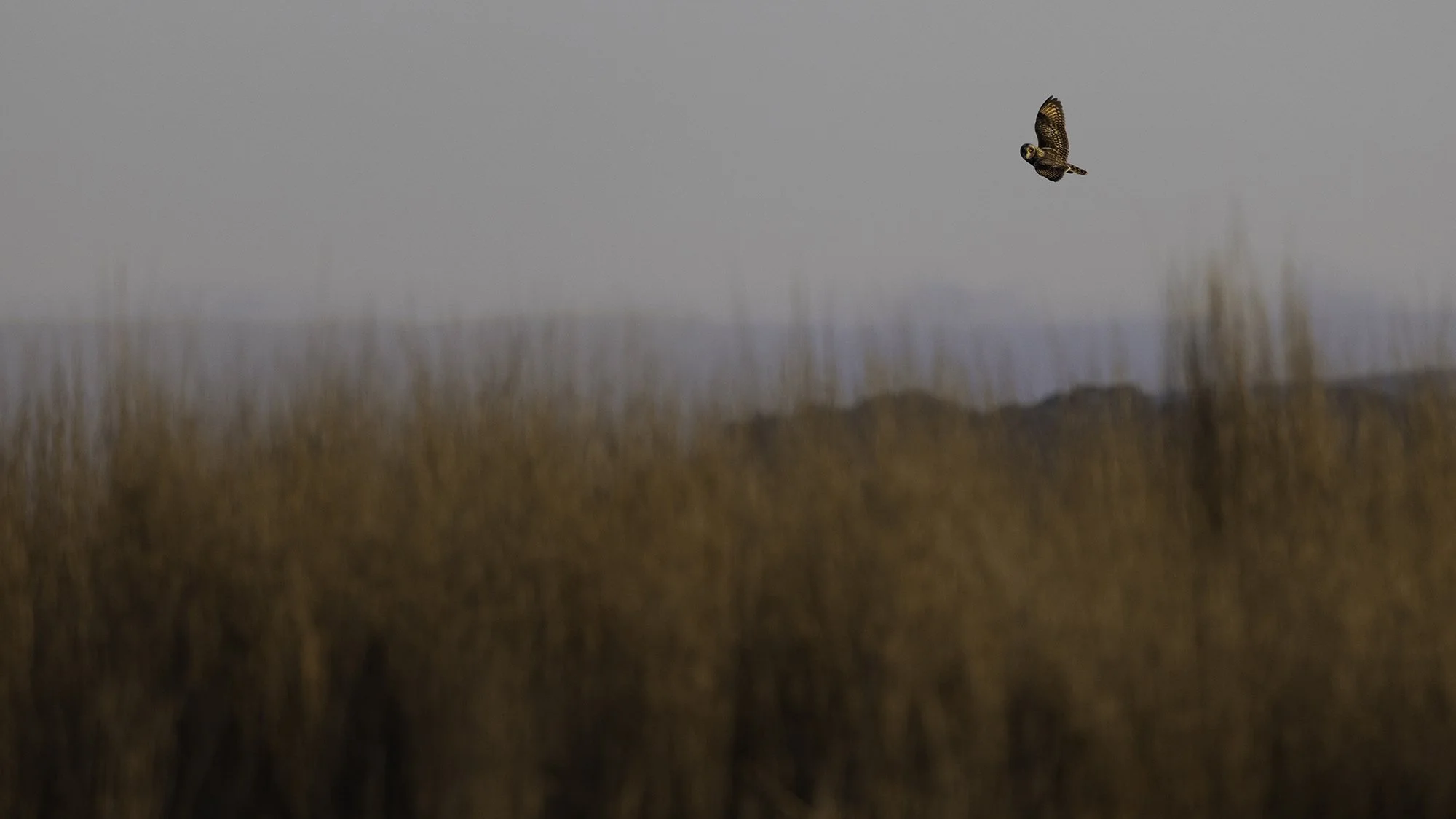
As the sun dipped below a layer of clouds, what had been a flat, gray winter afternoon suddenly transformed. Low, golden light spilled across the landscape, adding warmth and depth to the scene. Nobody else was around. The conditions were right. All I needed were the owls. And they delivered.
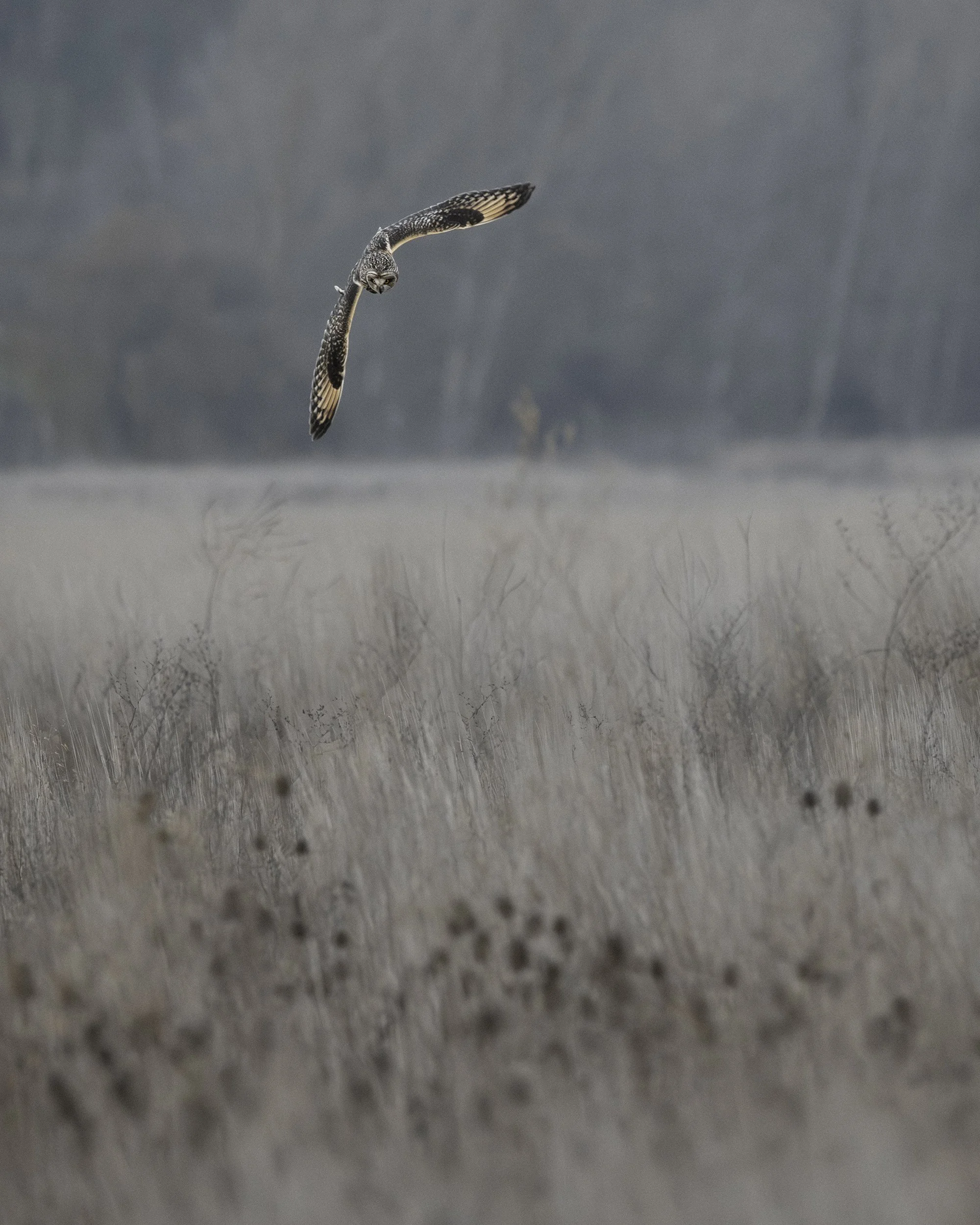
For roughly an hour before sunset, multiple short-eared owls took to the air, swooping, soaring, diving low over the grass in search of prey. It was an incredible show, the kind of wildlife experience that fully absorbs your attention and makes you forget everything else.
Everything was happening quickly, and I was intensely focused on finding … well, focus. Capturing owls in flight is notoriously challenging, and there was little margin for error. Still, I loved every second of it. The pace, the constant problem-solving. It’s why I keep coming back. It was an immensely enjoyable hour. Yet, as I walked back to the car, that familiar question crept in: Did I actually get anything good?
That uncertainty is exactly why I say that being out in the field is only half the fun. The other half begins once I’m home, working with the images. Post-processing isn’t just a technical step for me, it’s a continuation of the creative process, and I genuinely enjoy it.
My workflow starts with transferring all the images to a NAS drive, where I keep my RAW files organized by year and location. From there, I import everything into Lightroom and apply keywords to tag the species. On this particular outing, that meant sitting down with roughly 900 images. The first pass is all about focus. I go through every frame and rate each image with stars based solely on sharpness. Anything that receives zero stars is deleted outright. If it’s not in focus, it’s not worth the storage space or the mental energy.
Once that pass is complete, I filter down to the five-star images. At this stage, I know they’re technically solid, so I can shift my attention to more subjective criteria: composition, behavior, and overall impact. This is where things really get interesting. An average composition can often be transformed with a thoughtful crop. Subtle adjustments to contrast and vibrance can reveal drama that wasn’t immediately apparent in the RAW file. As I work, I add any image with real potential to a quick collection, knowing I’ll come back to refine them further.
From the original 900 images, I ultimately narrowed the selection down to 40. That’s less than five percent of what I shot, but it means I’m only investing time and energy into the strongest material. And honestly, 40 images from about an hour of fast-paced wildlife photography feels like a great success.
The owls had shifted locations repeatedly as the light changed, so I was especially pleased with the final results. Seeing those images come together after all the uncertainty in the field, was deeply satisfying.
That’s why, for me, wildlife photography doesn’t end when I pack up my camera. The field experience may be exhilarating, but shaping those moments into finished images back at the computer is just as rewarding. It’s not a separate task, it’s the other half of the fun.