Working the Scene
When I’m on a trip that isn’t really a photography trip but I know there are opportunities nearby, I get a little antsy. Lying on the beach, I find myself wondering what’s moving through the water just out of view. On a hike, I catch myself staring at branches, willing a new bird to appear. And when I know I should be sleeping like everyone else, I’m calculating whether I could slip out for a sunrise shoot before anyone stirs.
This month, our family took a few days in Hawaii: good food, pool time, a little tourism. Rest and relaxation, genuinely. I brought my camera, as always, but tried to honor the spirit of the trip. That meant when a photography opportunity did appear, I had to work it as fully as I could in whatever time I had. Two occasions stood out.
The first was at the beach. We had settled in the shade of a sea almond tree, maybe twenty feet from the hotel grounds, surrounded by other guests doing exactly the same thing. I wasn’t expecting much wildlife activity. I was wrong.
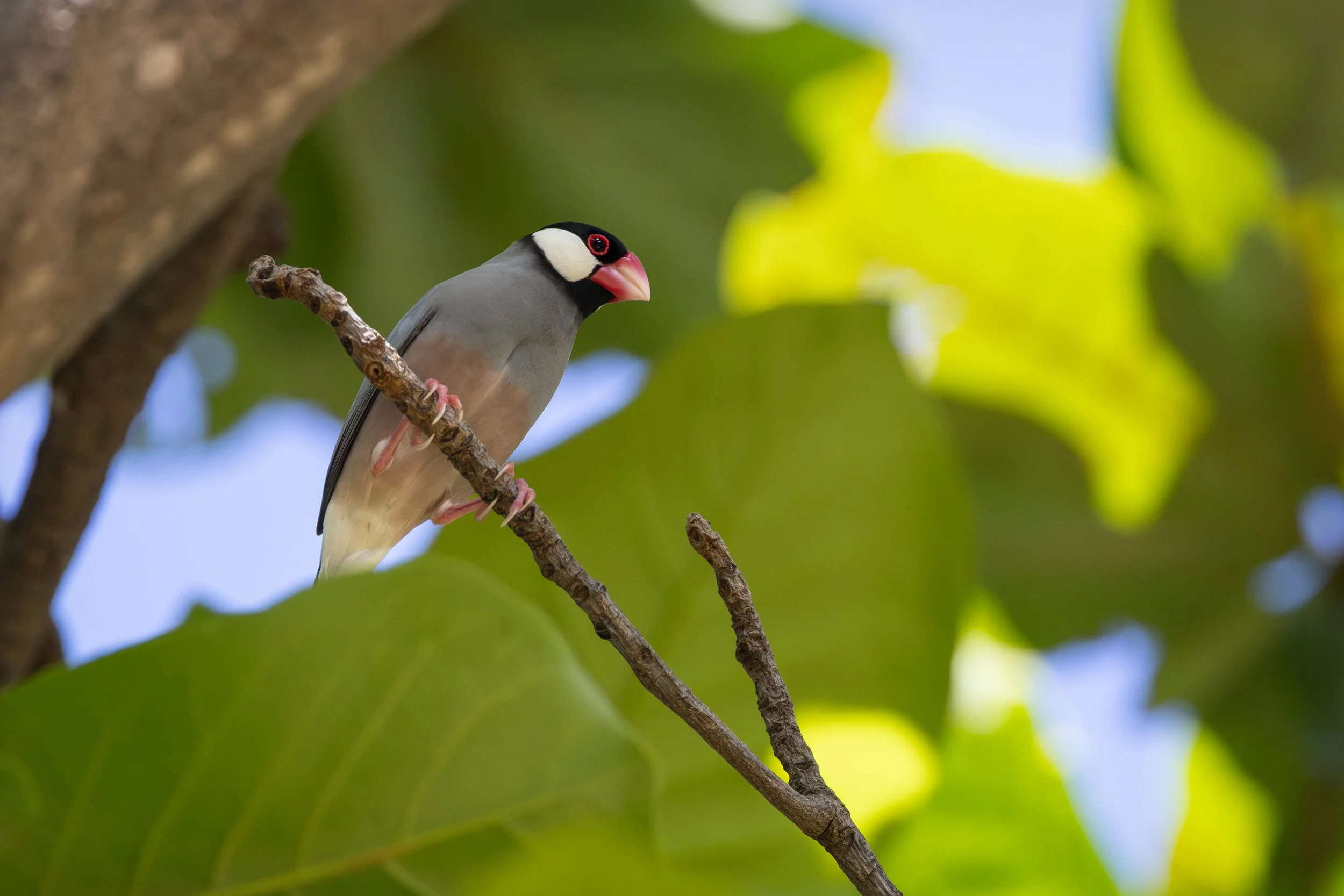
The tree was busy. A northern cardinal (Cardinalis cardinalis) bounced through the branches. Java sparrows (Lonchura oryzivora) and warbling white-eyes (Zosterops japonicus) moved back and forth with their usual efficiency. Common mynas (Acridotheres tristis) and pigeons settled into the shade alongside us. A grey francolin (Francolinus pondicerianus) scurried past at the base of the trunk.
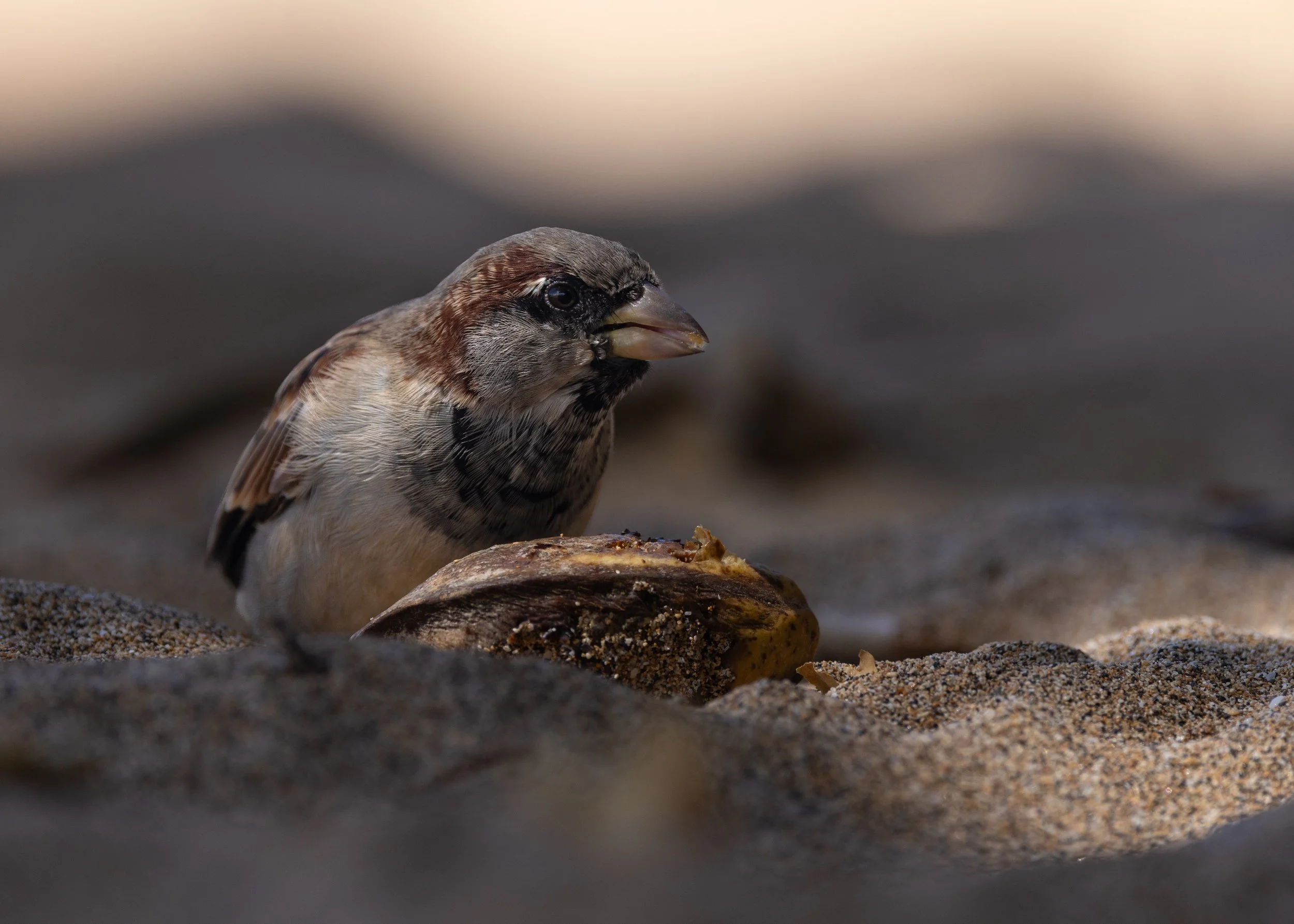
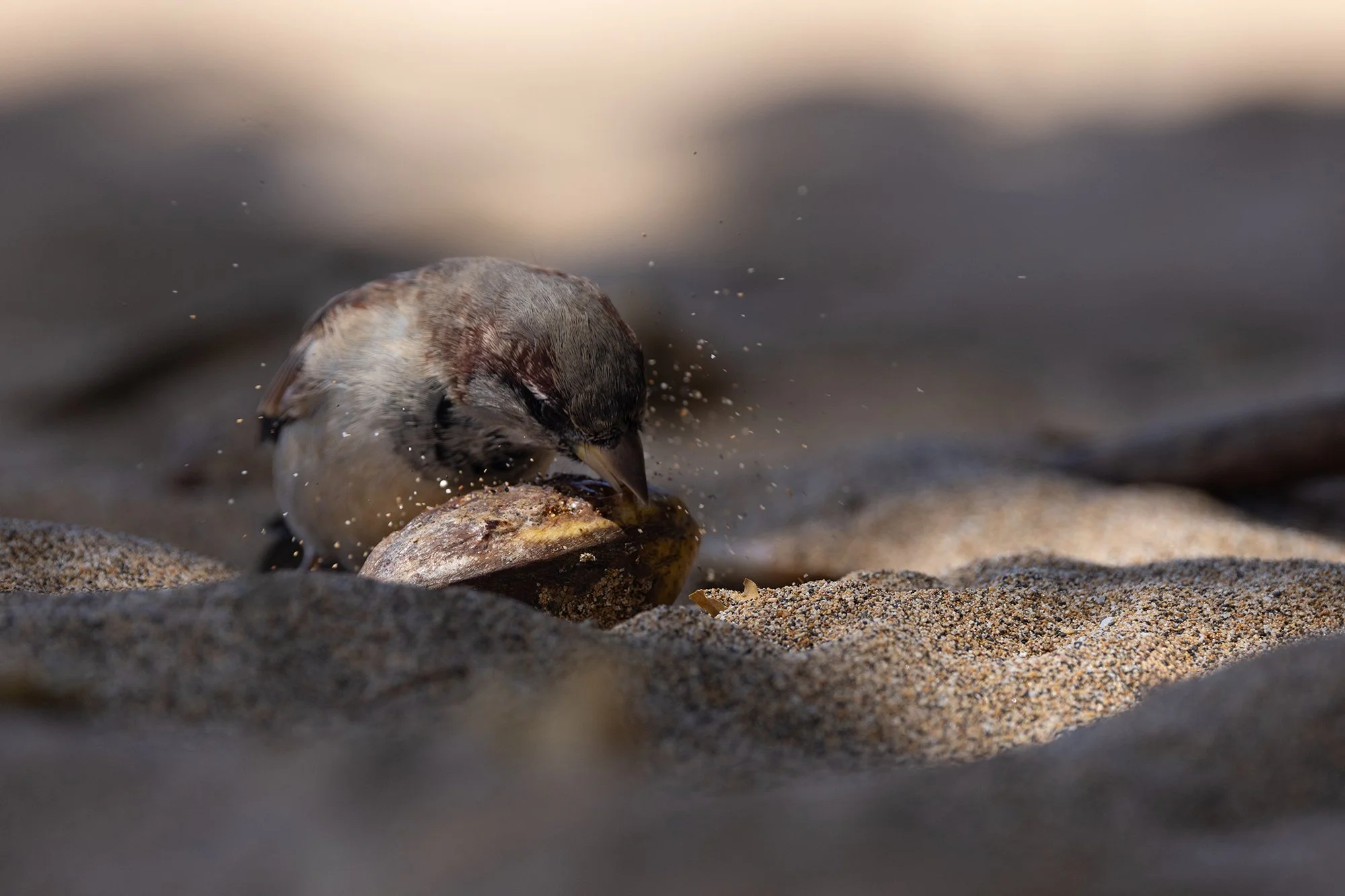
My attention, though, settled on the house sparrows (Passer domesticus). Unassuming birds under most circumstances, but here they were close, unhurried, and actively feeding on the tree’s nuts, which meant there was behavior to photograph, not just a bird sitting on a branch. On a hike, I’d have noted them and kept moving. Here, with nowhere to be, I gave them my full attention. That shift in mindset, from passing through to actually stopping, changed what I was able to see. What had looked like a shady spot to kill time revealed itself as a small, self-contained ecosystem: multiple species, distinct behaviors, and more than enough to work with.
The second occasion was a brief stop at Punalu’u Black Sand Beach on the Big Island, a detour on a day trip focused primarily on Hawai’i Volcanoes National Park. We had twenty minutes.
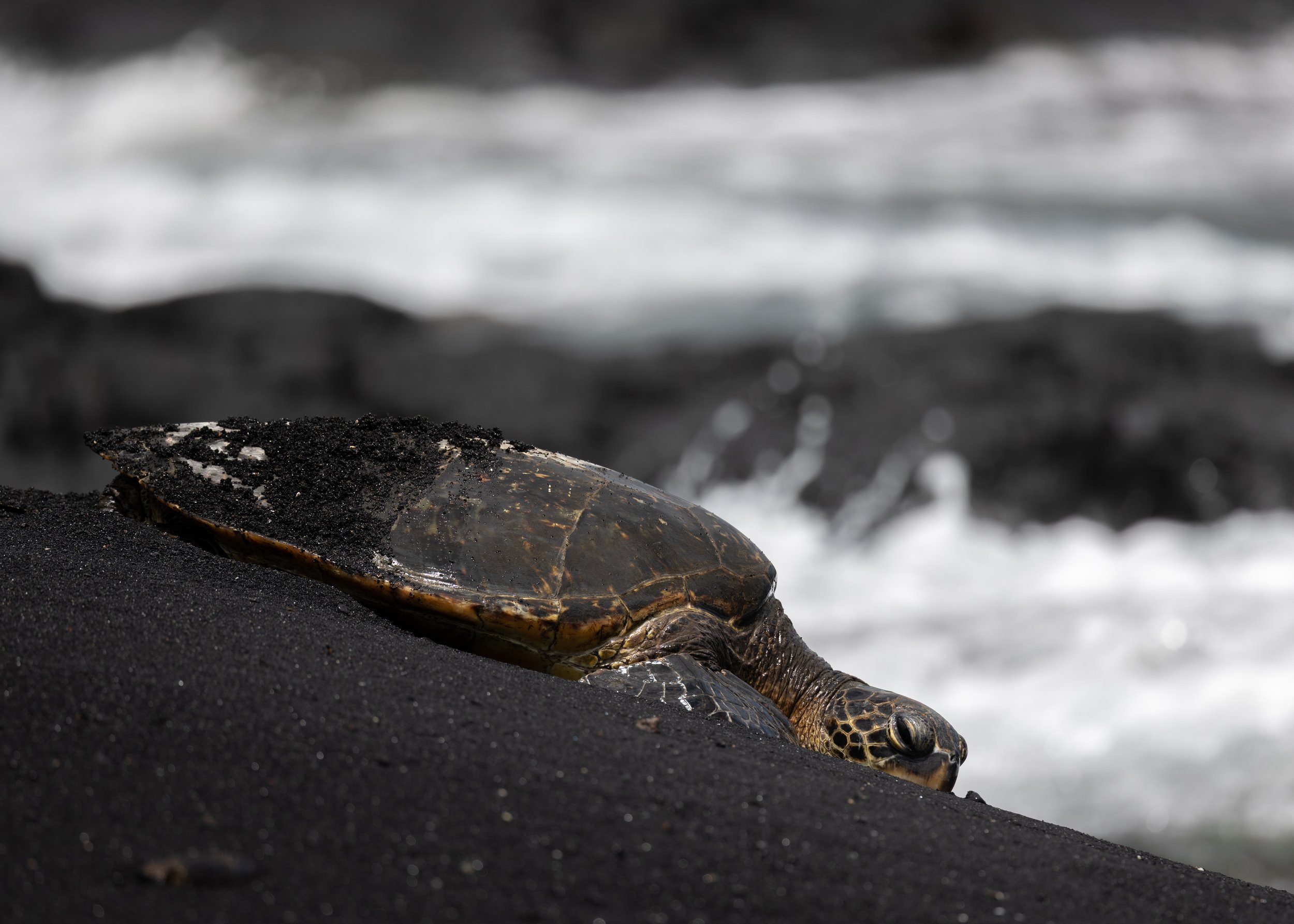
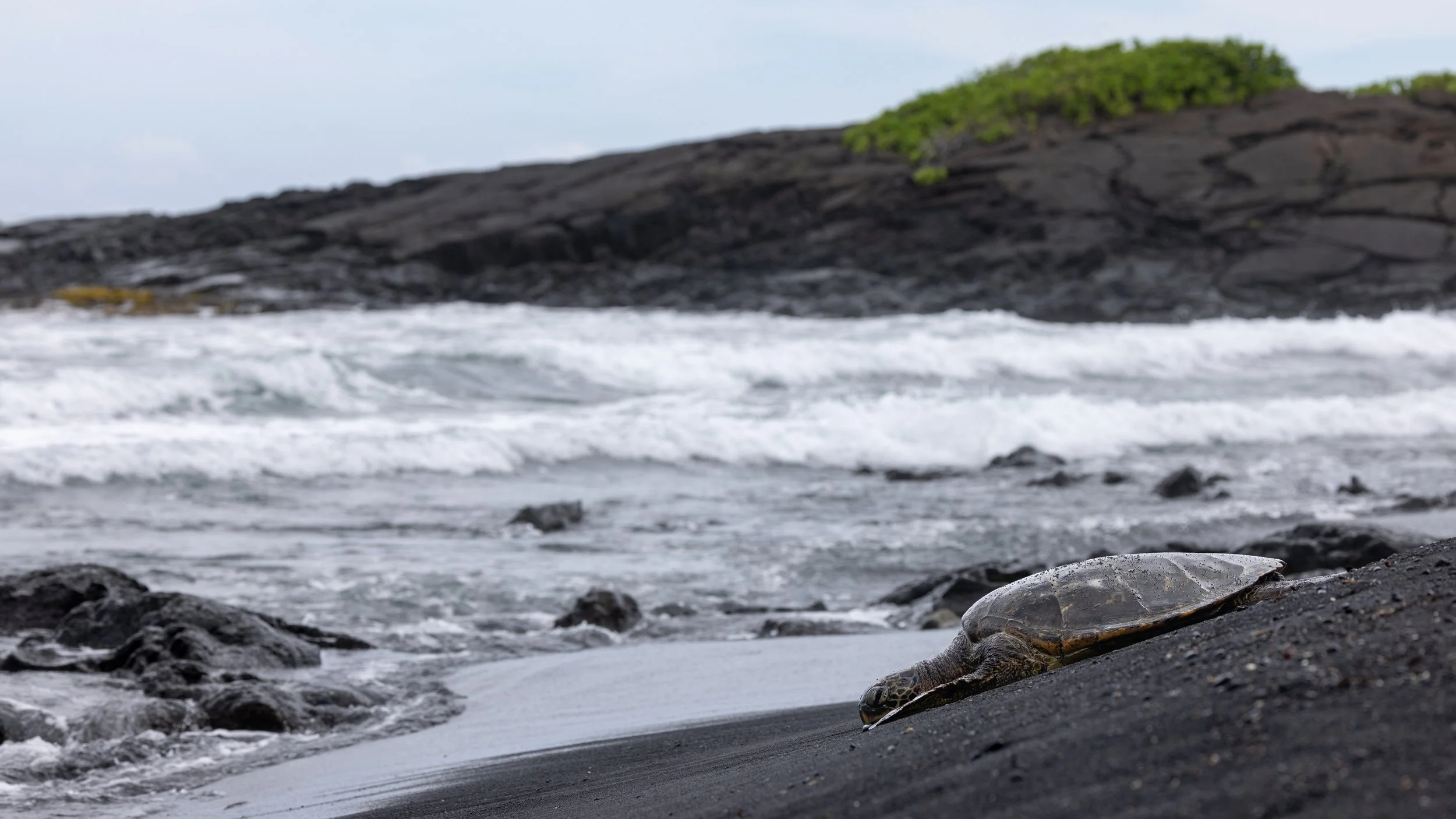
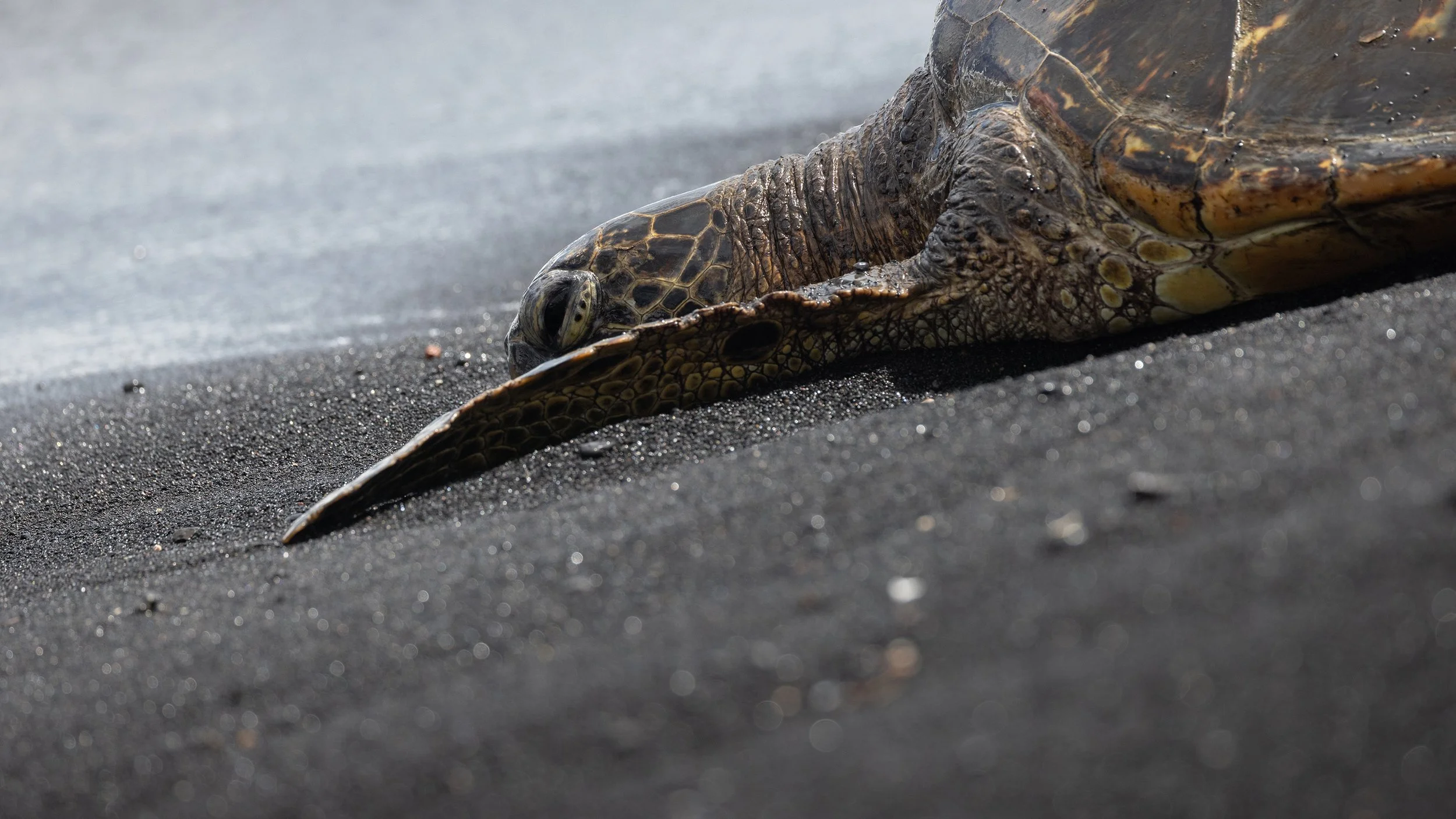
A green sea turtle (Chelonia mydas) was hauled out on the sand, facing the ocean, entirely unbothered by the small crowd keeping a respectful distance. It was a striking sight. I got into position immediately and started working toward the shot I needed most: clean composition, shallow depth of field, focus on the eye. Once I had something I was confident in, I could breathe.
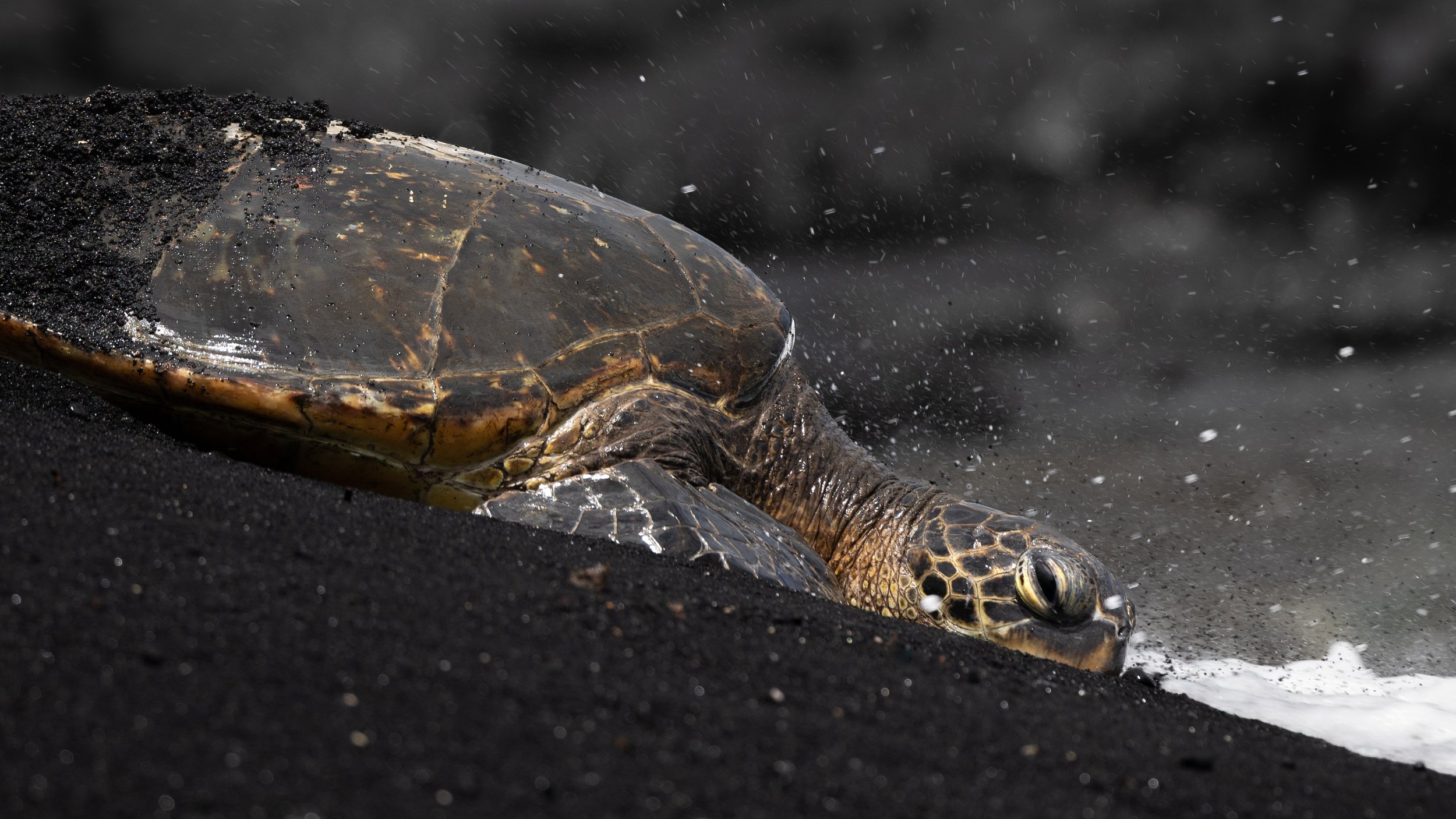
From there, I began moving through options systematically. Zooming in for details, pulling back for environmental context, repositioning to change the angle of light. When the waves came in stronger, sea foam sprayed around the turtle’s head, and suddenly there was motion to work with too. I’d photographed green sea turtles before at Ho’okipa Beach Park on Maui, an idyllic setting with clear water and pale sand, and the contrast here was immediate. The black sand gave everything a different weight. More dramatic, somehow more primal.
I tried removing my shoes to move more freely if the water crept higher. The sand was too hot for that. I switched sides instead, working a different perspective. The whole time I kept my distance, which on a beach with other visitors around felt like the right example to set as much as the right instinct.
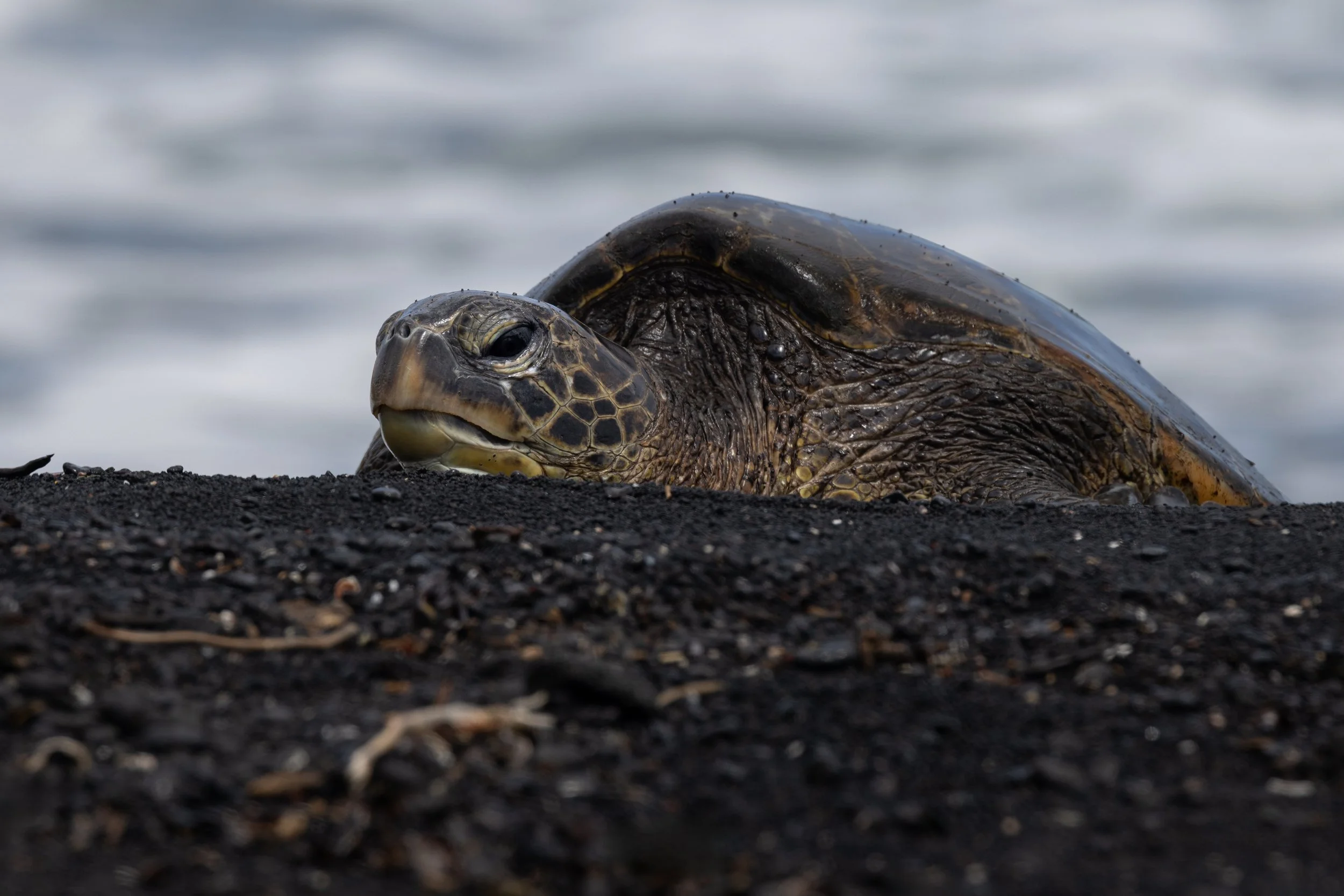
Then, just as we were nearly out of time, the turtle turned and began moving up the beach toward me. I lay down on the hot sand and shot it head-on as it climbed, unhurried and deliberate. When it lifted its head and showed its full beak, I knew I had something genuinely different from the earlier frames. A minute later, it was time to get back on the bus.
The two scenes weren’t identical experiences. At the tree, working the scene meant slowing down and giving proper attention to something I might otherwise have dismissed. At the beach, it meant moving quickly and methodically through a checklist of shots before the clock ran out. But the underlying idea was the same: extract as much as possible from whatever you’re given, and resist the urge to either rush past it or wait passively for something better to come along.
Neither required a dedicated photography trip. They just required paying attention.