Last month, I made the drive out to Drakes Beach at Point Reyes National Seashore, hoping to spend some time with the northern elephant seals (Mirounga angustirostris) that haul out there each winter to breed, give birth, and rest.
As is typical during pupping season, the beach itself was closed to visitors. It’s not ideal for photographers hoping to find the perfect angle, but it’s completely necessary to protecting these animals during one of the most critical periods of their year. I worked with what was available to me, picking out individual animals from the access areas using a long lens.
I've had the good fortune to photograph elephant seals at Point Reyes a number of times over the past few years. When that's the case, I try to go beyond the familiar and look for behaviors or details I haven't captured before; the moments that fill out a more complete picture of what life is actually like for this species.
That afternoon, within thirty yards of each other, I found exactly that.
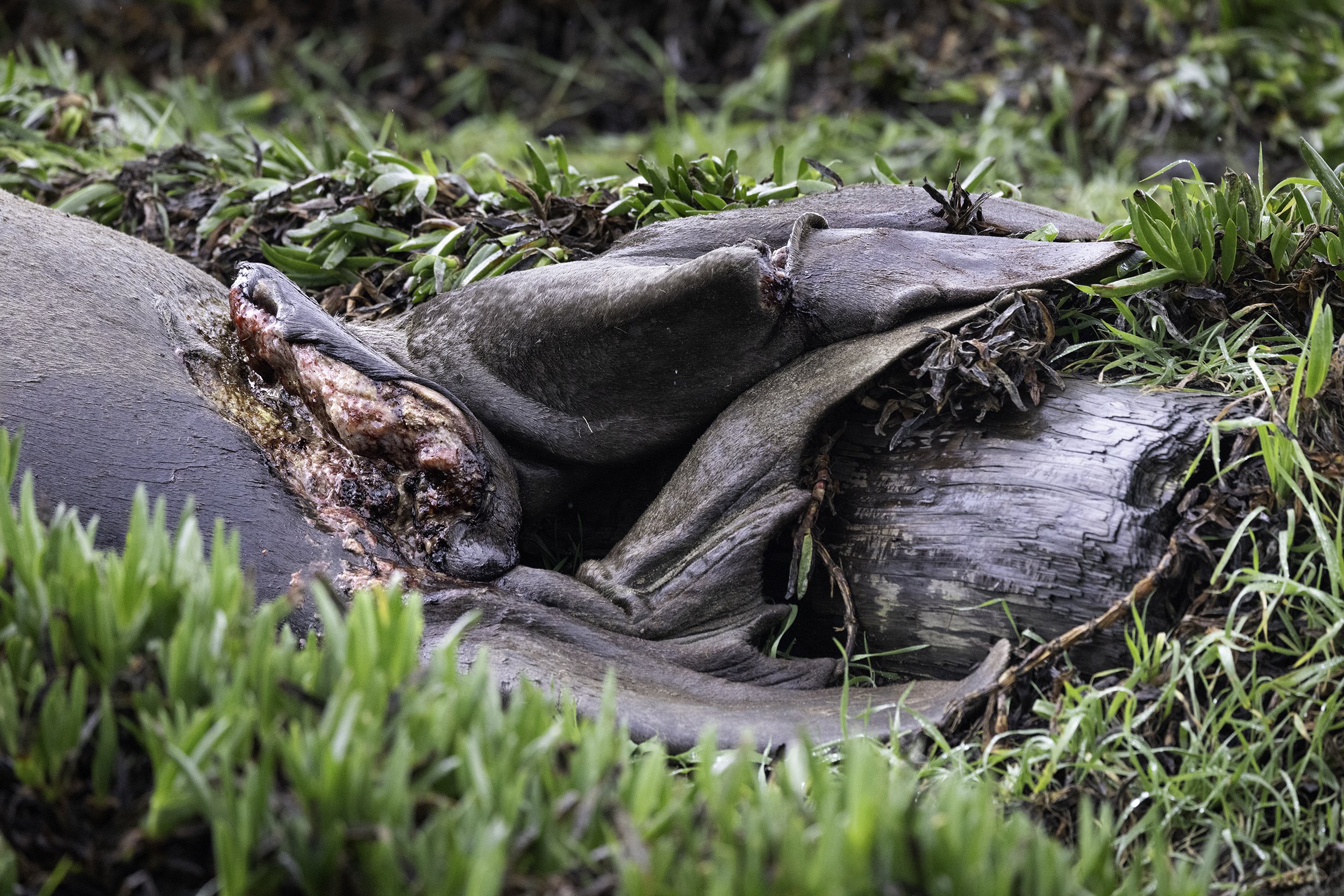
The first was a large male hauled out on the ice plants above the tide line. At a glance, he looked peaceful asleep, but a closer look told a different story. Along his rear flank was a serious open wound. A docent told me he had been attacked by a great white shark (Carcharodon carcharias). It was impossible to know how much pain he was in, but the fact that he hadn't been removed suggested the Marine Mammal Center didn't consider his condition critical. Still, it was a reminder of just how unforgiving their lives in the ocean can be.
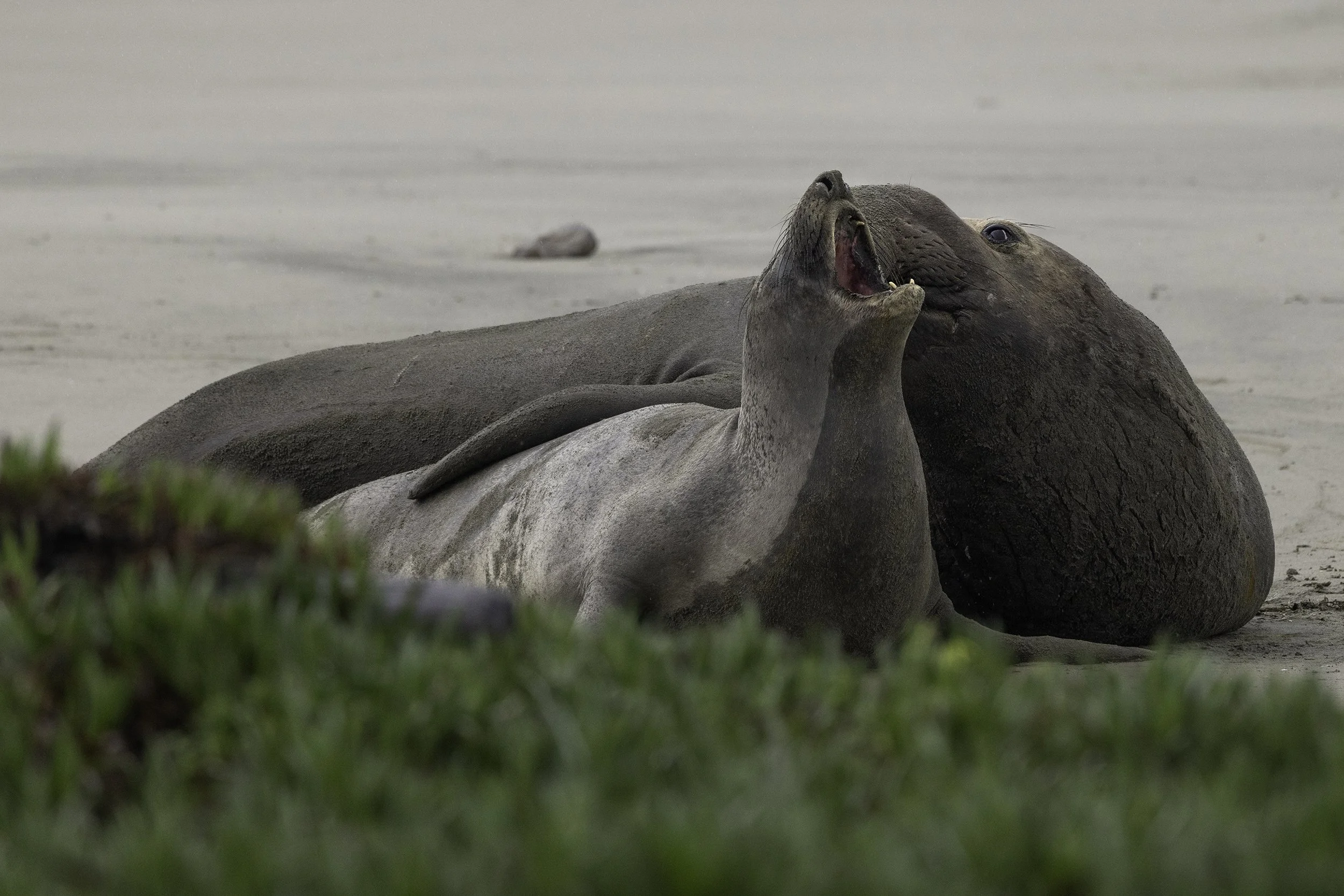
Not far away, a noticeably larger male was mating with a female. Life, in the most literal sense, going on.
It's easy to look at a winter beach and see stillness. What I've learned, returning season after season, is that the stillness is never really the whole story.