A Story in the Sage
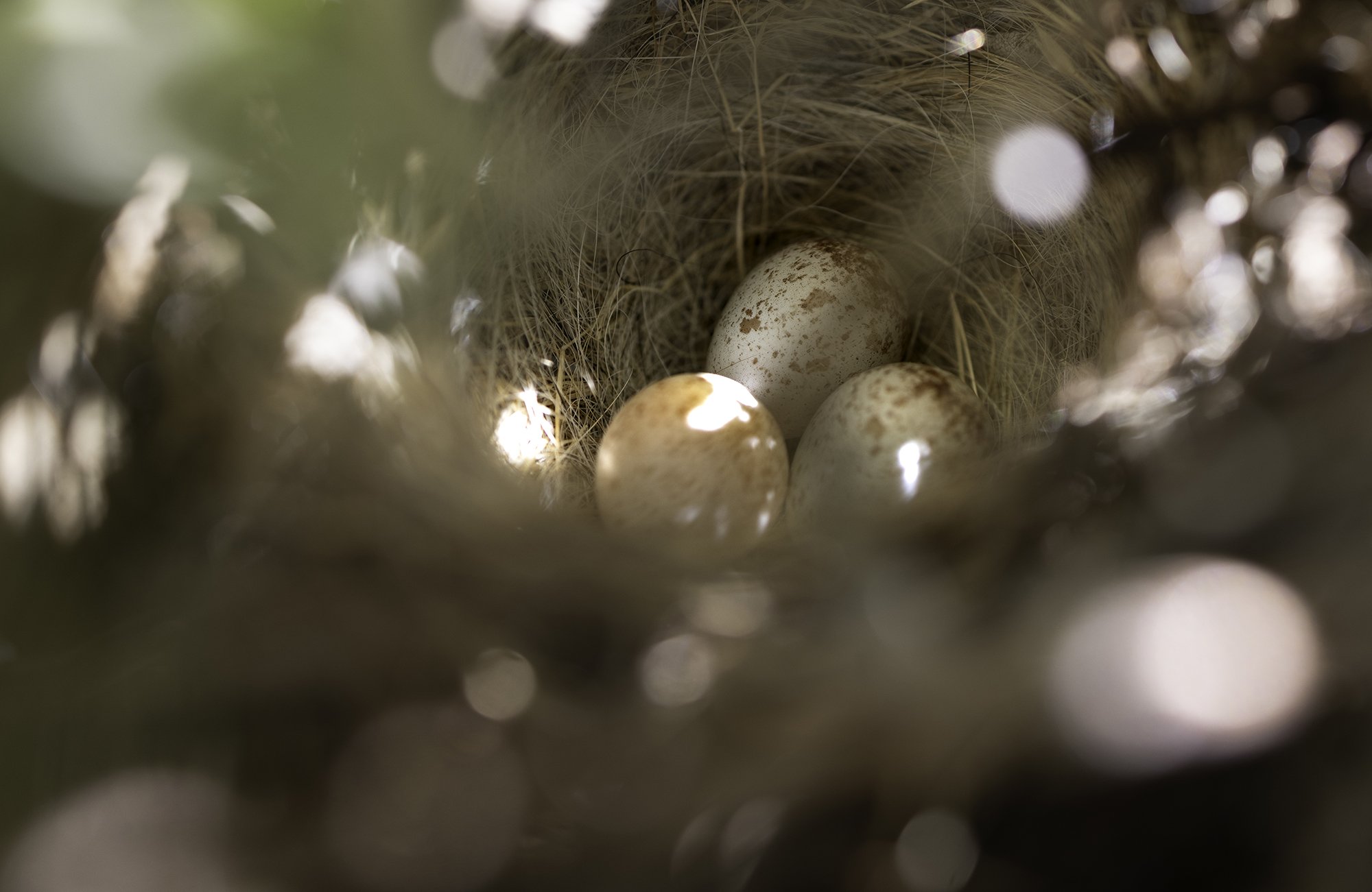
Dark-eyed junco nest with three eggs
Most of my wildlife photography opportunities are one-off events. A bobcat hunting in a field, a brief chance to create a photo, then gone. A coyote winding its way through the bushes, glimpsed before it vanished again. These encounters are fleeting by nature, single frames pulled from a much longer arc I'll never see.
Occasionally, though, I get to photograph more of that arc. Elephant seals are predictable in this way; year over year, I can return to the same beaches and find different chapters of their lives unfolding: fighting, mating, giving birth. But opportunities like that are rare, and they require travel, timing, and a fair amount of luck.
Recently, I found a story rather than a moment much closer to home, in my own backyard.
It started when I noticed a dark-eyed junco (Junco hyemalis) behaving oddly in the sage. She kept disappearing into the same low spot, then re-emerging to forage, then returning again. I assumed she was nesting nearby, but it took me a moment to realize where. I'd always pictured songbird nests up in branches, tucked into the safety of a shrub or tree. As it turns out, juncos are ground nesters, often building in a shallow depression at the base of plants, hidden from above but startlingly exposed at eye level. Once I knew what I was looking for, I found it: a small open cup of grass, lined with finer material, sitting almost invisibly in the sage just a few feet from where I'd been walking for weeks.
The nest held three eggs, which I photographed before incubation properly began. I learned, watching her settle in day after day, that only the female incubates. The male's job during this stage is different but no less important: he brings her food while she sits, freeing her from having to leave the eggs unattended for long.
Roughly two weeks later, the chicks hatched, and the whole rhythm of the nest changed. Where the male had been delivering food to one bird, now both parents were feeding several. I read later that juncos are altricial, born blind and featherless, completely dependent on their parents for warmth and food. It didn't take long to see the truth of that. The chicks in the nest were a tangle of necks and open mouths, tucked in so tightly together it was hard to tell where one ended and the next began. For the next week or two, both parents worked constantly, arriving with food, leaving, arriving again. The chicks grew fast. Visibly, day to day.
Then, the day came when the nest was empty. The fledglings had gone, scattered into the surrounding gardens where, I learned, they'd likely stay close by for another couple of weeks, still relying on their parents while they figured out how to be juncos in the wider world.
I didn't witness every individual moment of that process, but I came close: eggs, incubation, hatching, feeding, fledging. A full arc, photographed without leaving my own yard. It's made me wonder what else might be unfolding around me, and given me one more reason to keep watching.
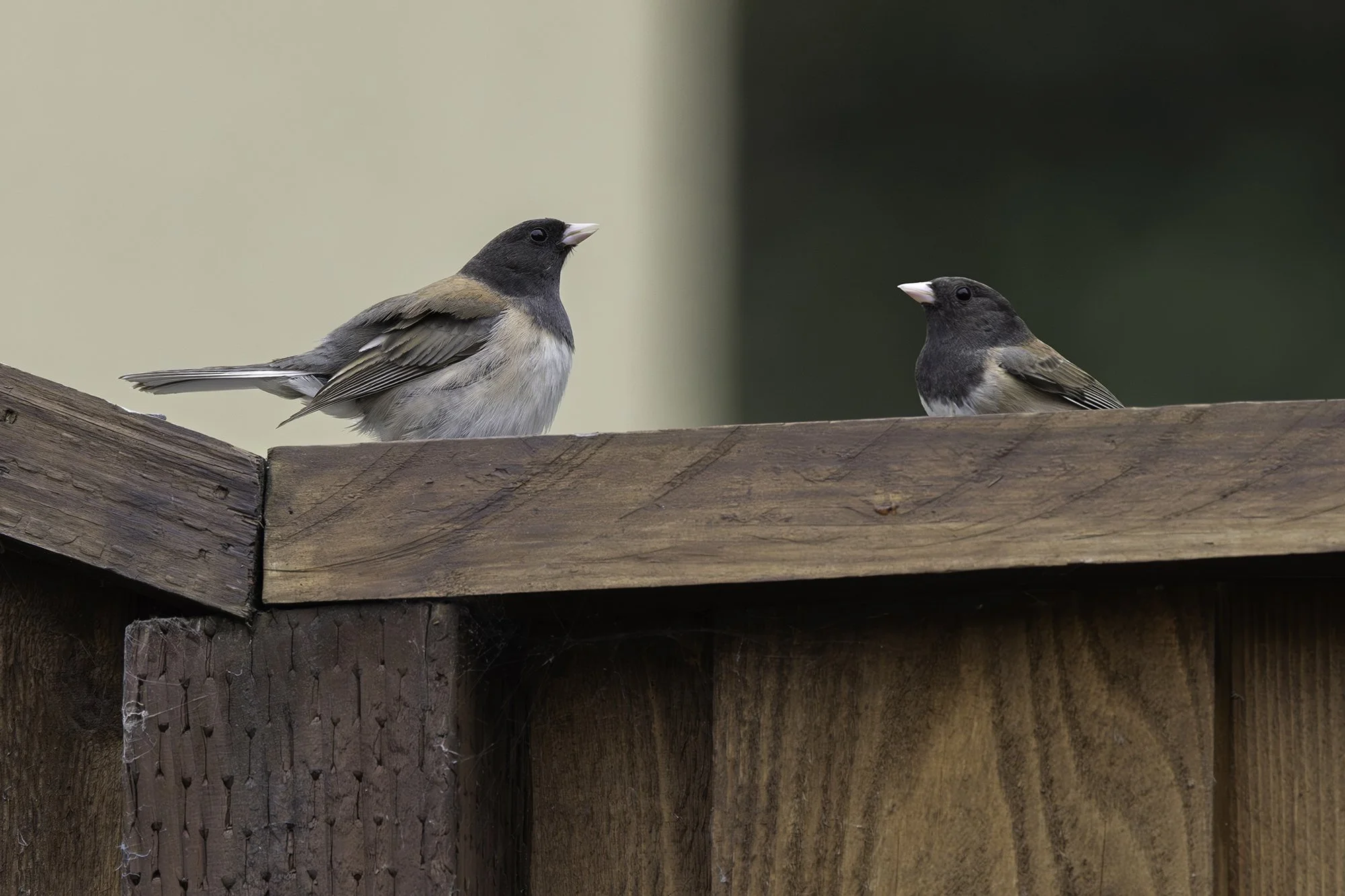
The parents
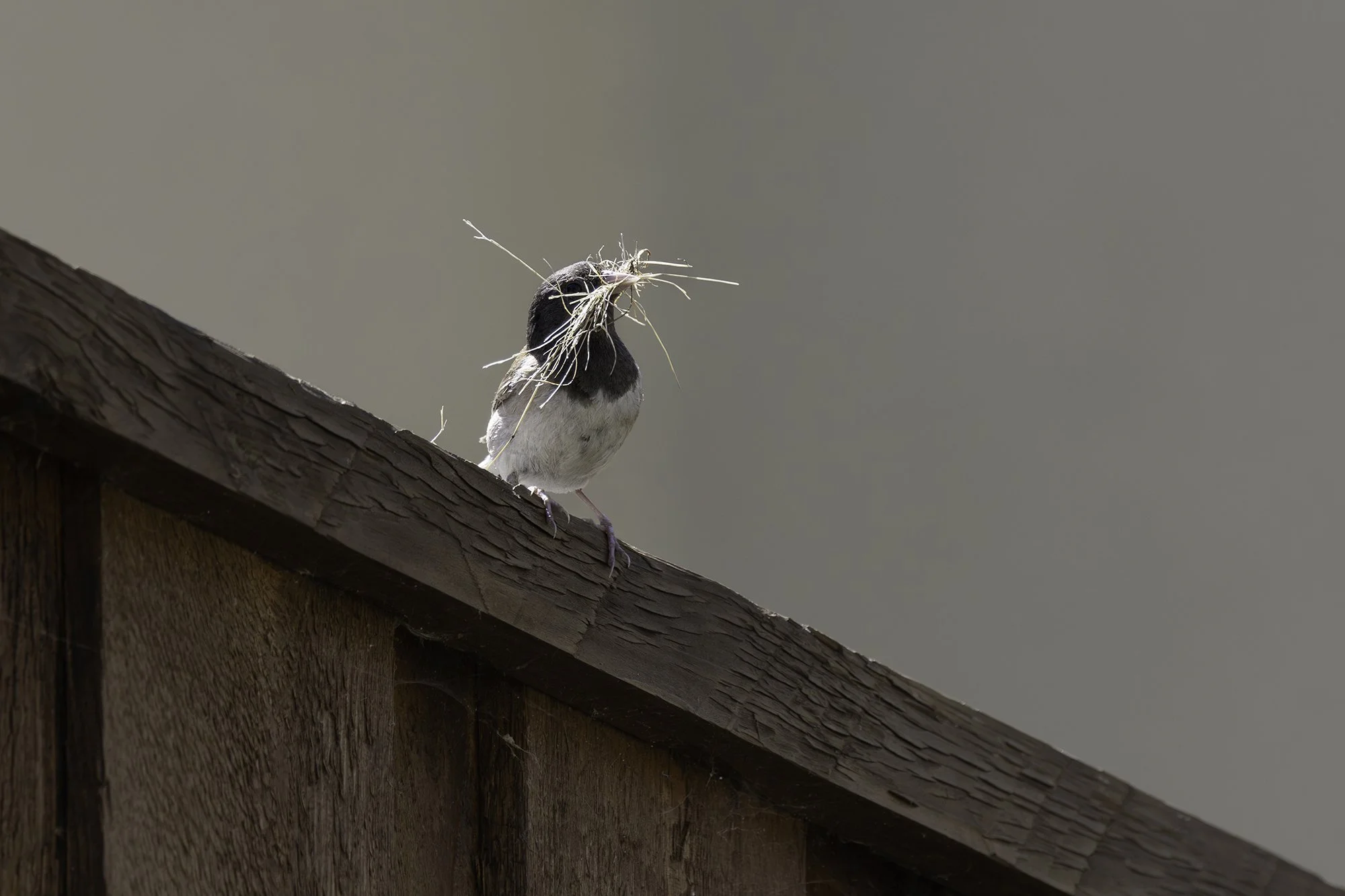
Nest building in progress
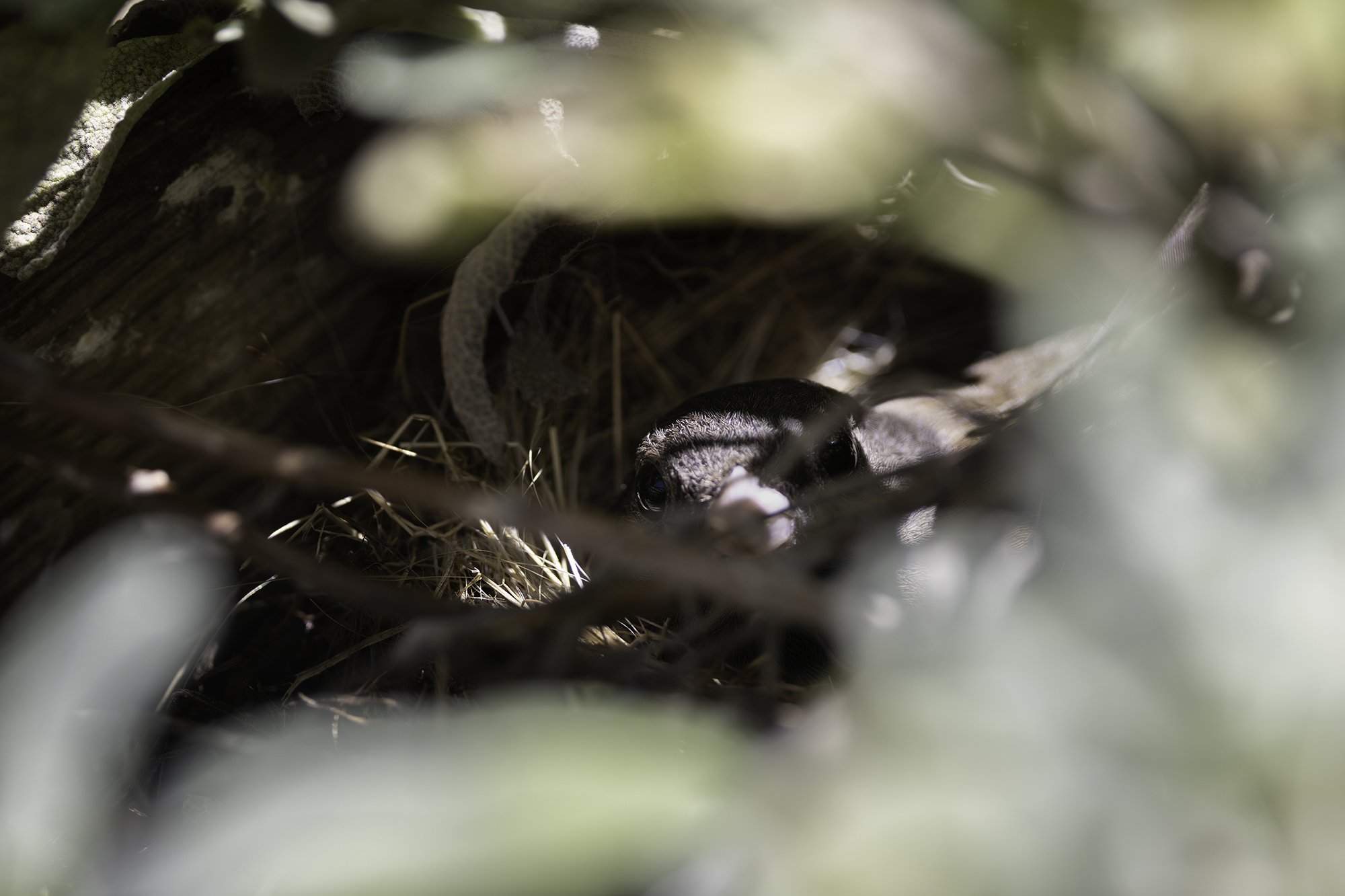
The mother incubating the eggs
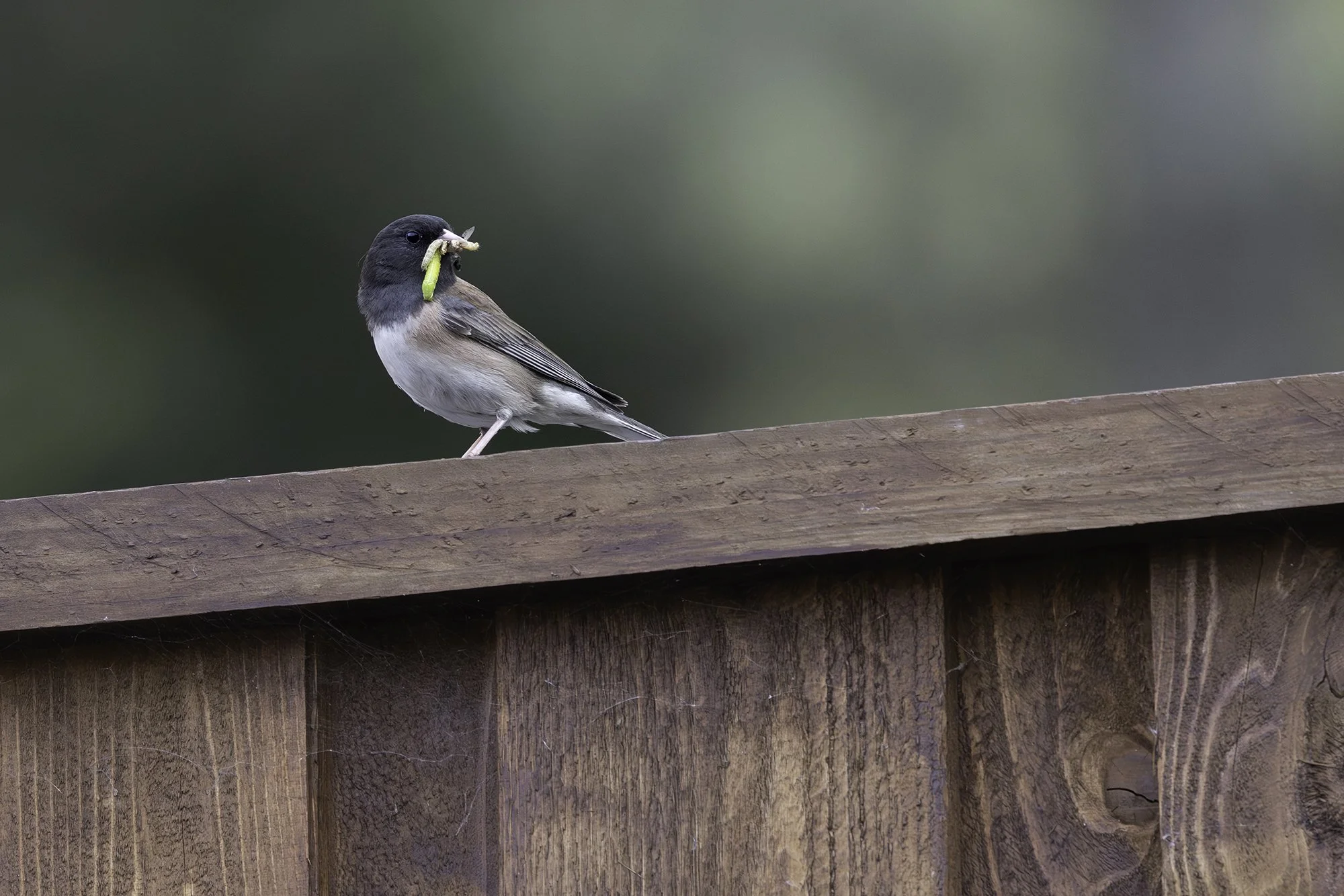
Parent bringing food for the chicks
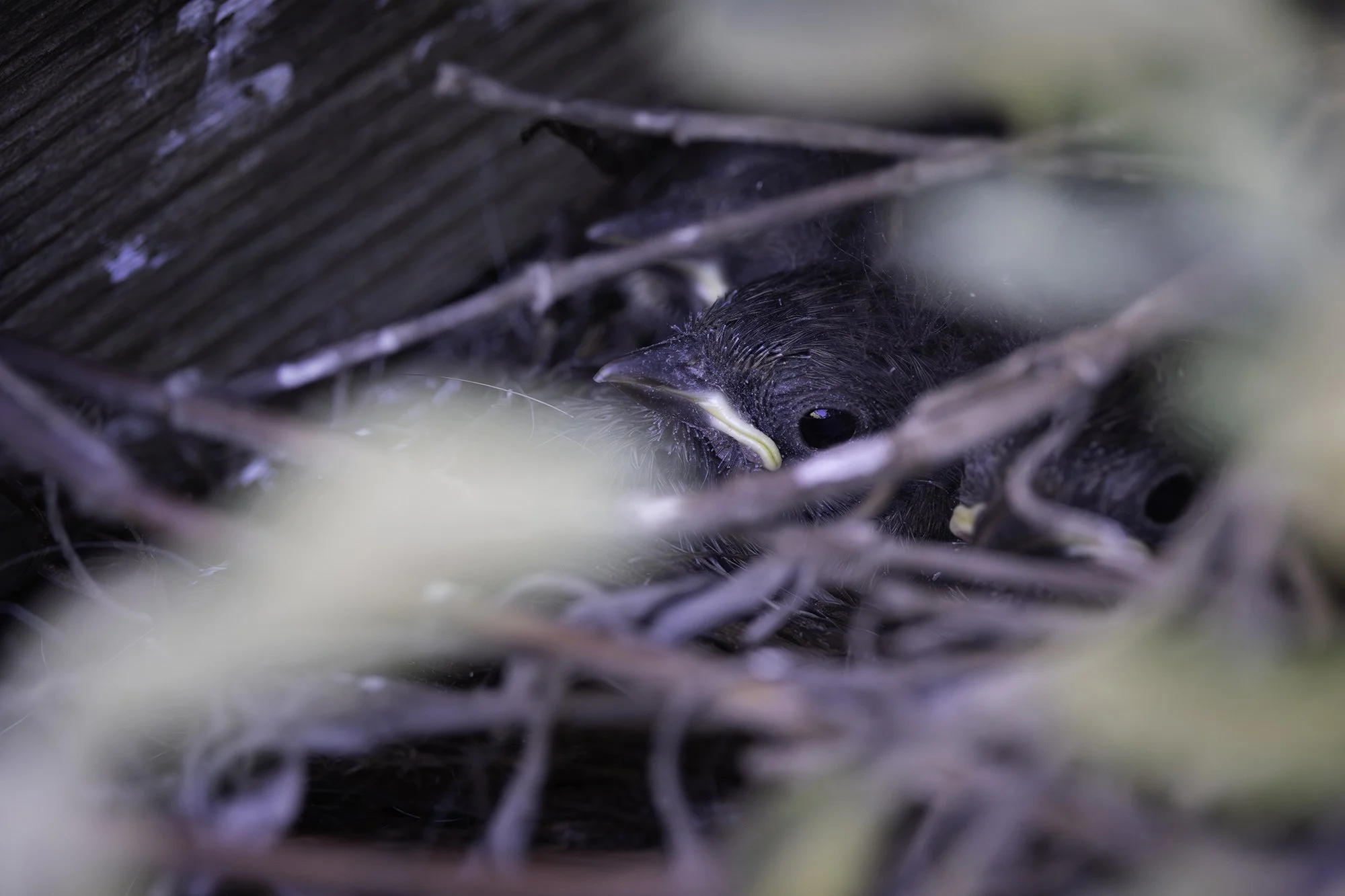
Three chicks in the nest
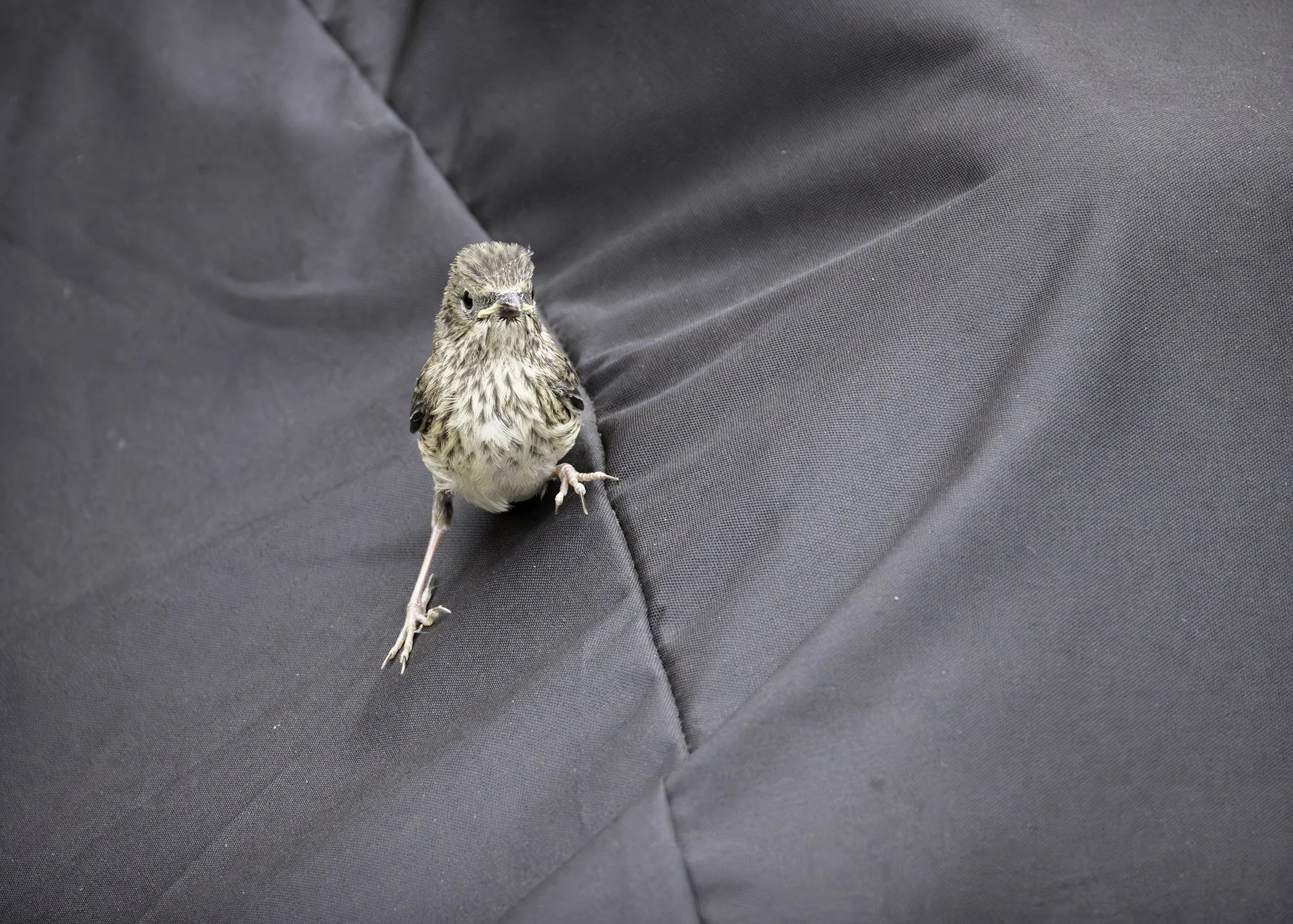
A fledgling
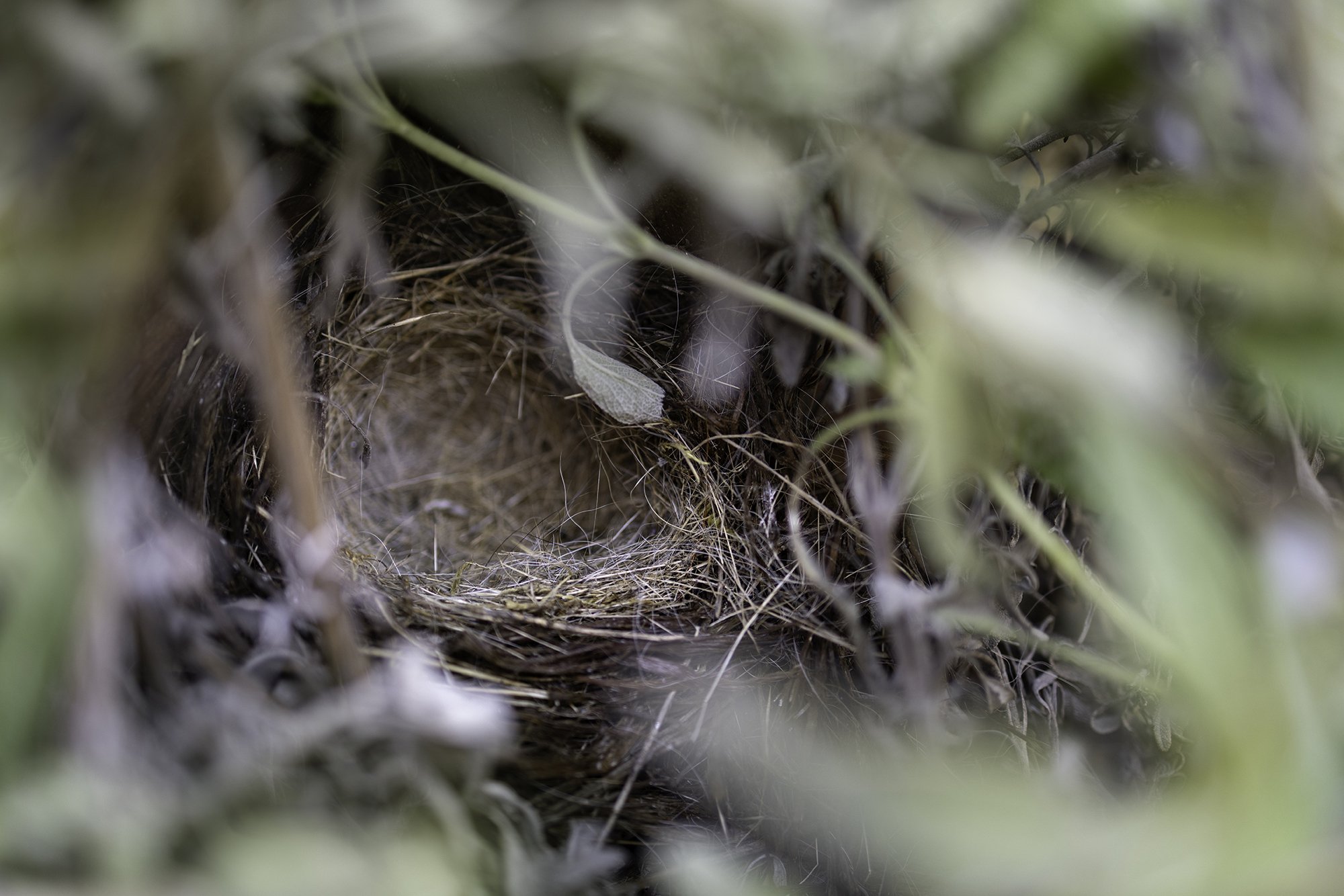
The empty nest